

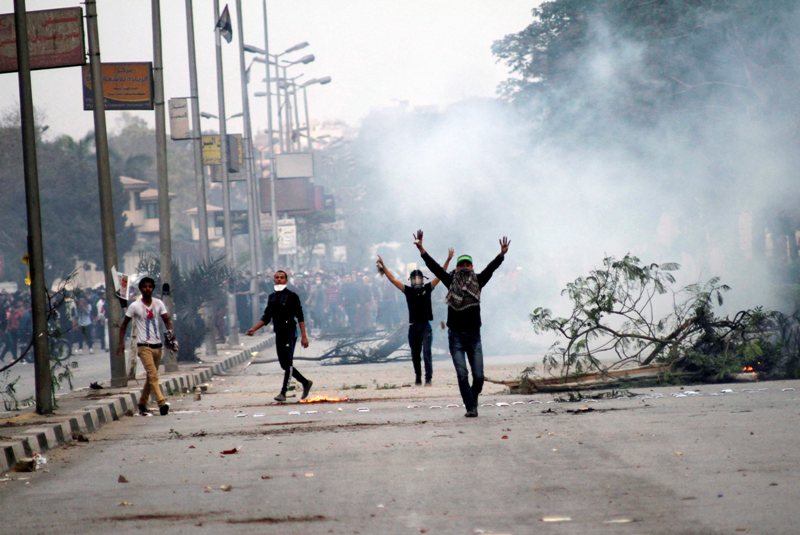
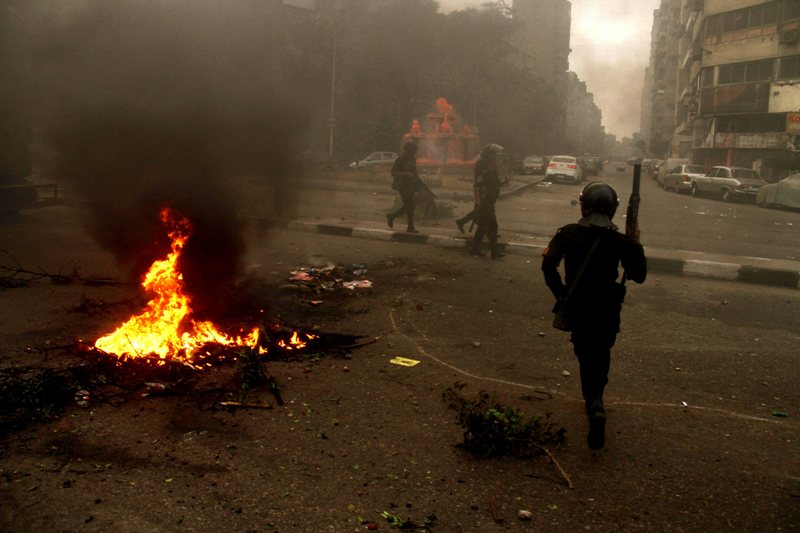
CAIRO, Egypt – A top Egyptian government official strongly denounced a new protest law Saturday as police fired tear gas and used batons to beat back stone-throwing demonstrators in Cairo.

The violence came as a 50-member panel amending the country’s 2012 Islamist-drafted constitution is scheduled to begin voting on its final recommendations Saturday. An expected referendum on the changes is widely seen as a key milestone in Egypt’s transition to democratic rule after a popularly-backed military coup toppled Islamist President Mohammed Morsi in July.
Speaking about the new protest law, Deputy Prime Minister Ziad Bahaa-Eldin said he opposed it because it restricts the right to demonstrate and was not adopted by an elected parliament. The liberal politician called on authorities to review the law to show that the state was ready to listen to the country’s secular activists, who have been staging several protests in defiance of the law.
“It is not a shame and it does not detract from the prestige of the state to reconsider a law that will only widen the gap between the state and the youth,” Bahaa-Eldin said on his official Facebook page.
Get breaking National news
The law enacted Sunday allows security agencies to bar protests not previously reported to the country’s Interior Ministry, while also setting prison terms and high fines for violators. It appears aimed at breaking the back of the near-daily protests by Islamists supporting Morsi and others who oppose the country’s military-backed interim government. However, it has angered secular allies of the current government who have been largely mute since Morsi’s ouster.
Since the law’s adoption, security forces forcefully dispersed several rallies and detained protesters. A student was killed Thursday when police put down a march by Islamists from Cairo University. Saturday, some 130 professors and administrative staff of the university’s engineering department called for a strike over the student’s death.
In this tense atmosphere, Egypt’s constitutional panel is expected to start voting Saturday on a final draft of the document. The voting session will be aired live on state television, unlike previous sessions held behind closed doors.
Hours before voting began, panel leader Amr Moussa told reporters he hoped everyone supported the constitution.
“It is the transition from disturbances to stability and from economic stagnation to development,” Moussa said.
The panel has a Tuesday deadline to send the draft to the presidency. Interim President Adly Mansour then has one month to put the constitution to a public vote. Authorities plan to hold parliamentary and presidential elections early next year.
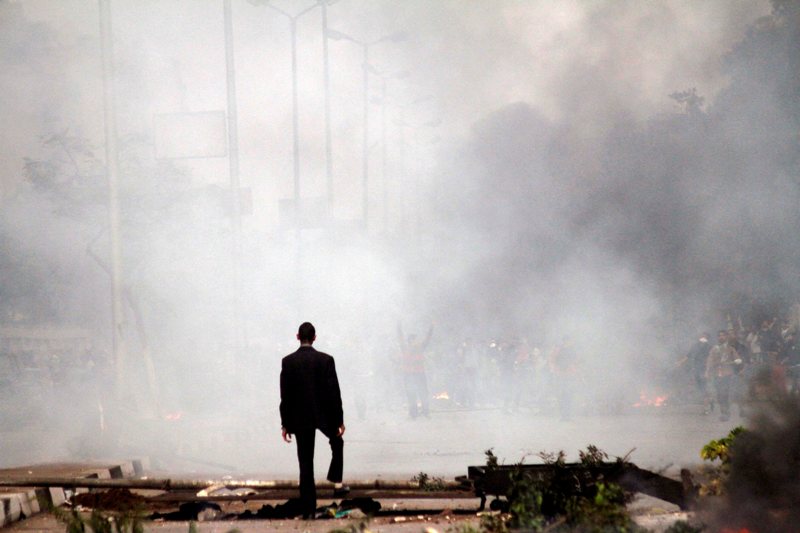
A few kilometres (miles) from the constitutional committee headquarters, brief clashes broke out when riot police with shields, batons and helmets chased protesters amid a thick cloud of gas. The demonstration was held near a Cairo court to condemn the detention of 24 activists arrested Tuesday while taking part in a protest that was not authorized by authorities.
Among protesters Saturday was Ahmed Maher, leader of the April 6 youth group that had a leading role in the 2011 uprising against longtime president Hosni Mubarak. He later turned himself into prosecutors over an arrest warrant for him on charges of inciting demonstrations against the new protest law. State television said prosecutors ordered Maher held until Sunday as investigators examine his case.
Meanwhile, in the restive southern province of Minya, unknown gunmen shot dead a Christian, days after three people died in sectarian clashes, authorities said.


Comments
Want to discuss? Please read our Commenting Policy first.