

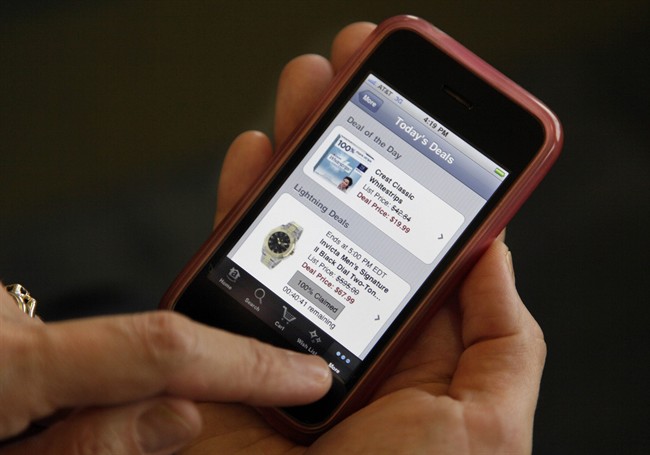
A new handwashing study has found cellphones teeming with bacteria – and some even harbour the sort of germs that should give people an incentive to scrub better after visiting the loo.

Sixteen per cent of hands and mobile phones examined for the study, conducted in 12 cities in the United Kingdom, were found to carry E. coli, which originates in fecal matter and can cause diarrhea and vomiting.
“We sent some of my students up and down the length and breadth of the country with a number of swabs, and they swabbed hands and the mobile phones associated with them, and they brought their swabs back … to identify the prime organisms,” said Ron Cutler, director of biomedical science for degree programs at Queen Mary, University of London.
“One of the major relationships was that basically if your hands are very dirty, then your phone tends to be also very contaminated with the same type of bacteria,” Cutler said in an interview Friday from London.
The students took swabs from the hands and cellphones of 390 people – about 30 to 40 samples per city, “which believe me, is a lot of bacteriology,” Cutler said.

Get weekly health news
An analysis found 92 per cent of phones and 82 per cent of hands had traces of some type of bacteria on them.
“And it does seem to change somewhat from the north to the south of the U.K. … Basically the further north you went, the higher the levels of contamination,” he noted.
In some cases, the phones were “extraordinarily contaminated” with thousands of bacteria, and this could potentially pose a health risk to the user, Cutler said.
“So basically what it shows is that in certain situations, although 95 per cent of our respondents said they washed their hands with soap and water, I think that was probably highly unlikely.”
The researchers also found that between 25 and 30 per cent of hands and phones were contaminated with Staph aureus, Cutler said.
Staphylococcus aureus is a bacterium commonly found on the skin and in the noses of healthy people. In most cases, the bacteria do not cause disease, but a cut in the skin or other injury may allow the organisms to enter the body and cause infection.


The next stage of the researchers’ analysis will determine whether an especially nasty and hard-to-treat bug -called methicillin-resistant Staphylococcus aureus – is among the bacteria found.
“If you have something like MRSA, and it could very well be MRSA on these phones, then obviously that can cause wound infections. But normal Staph aureus itself will cause wound infections,” Cutler explained.
He advised people to thoroughly wash their hands with soap and water after using the washroom, and to dry them well.
“Not surprisingly, wet hands can spread bugs much easier than you can with dry hands.”
The preliminary results of the U.K. study were released to mark Global Handwashing Day on Saturday. Cutler said his portion of the work was primarily sponsored by Wellcome Trust, with efforts also supported by a coalition that includes drug companies GlaxoSmithKline and Sanofi Pasteur.
In the coming months, his team will do further analysis of the masses of organisms from the phone and hand swabs to identify and test them. And then it’s hoped a full study will eventually be published in a medical journal.
“I think this is the first time such a large survey has been carried out over such a hugely variant group of people,” Cutler said.
“What we’re really interested in now is the degree of antibody-resistant bugs that’s on there, because we’re starting to look at them in that sort of light now, and they are there.”


Comments
Want to discuss? Please read our Commenting Policy first.