

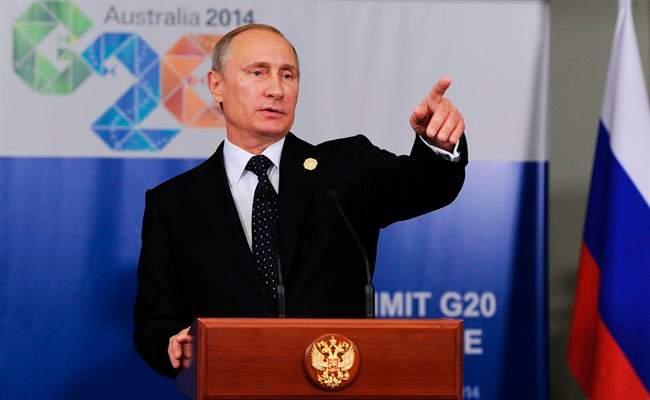
MOSCOW – Russian President Vladimir Putin on Thursday scrapped New Year’s holidays for government ministers because of the unfolding economic crisis.

Russian company employees throughout the country are entitled to holiday from Jan. 1 to Jan. 12 when Russians celebrate the New Year, the main holiday in Russia, as well as Orthodox Christmas on Jan. 7.
Putin told a televised government session on Thursday that Cabinet ministers should not take this time off.
“For the government, for your agencies we cannot afford this long holiday, at least this year – you know what I mean,” he said.
Get daily National news
Prime Minister Dmitry Medvedev told Cabinet ministers on Thursday he expects them to keep the situation in check even during the holiday lull “from the first days of the year.”
Russia’s economy, battered by low oil prices and Western sanctions, is set to enter recession next year for the first time in six years, while the ruble is now worth less than half of its value.
The ruble staged a modest rally last week and was trading 2 per cent higher at 52 rubles per dollar Thursday, up from 80 rubles earlier this month.
The Russian Central Bank announced on Thursday that the country’s currency reserve has dropped below $400 billion for the first time since August 2009, as the government has been selling the currency on the market to support the ruble.
Stabilizing the ruble, which is one of the world’s worst-performing currencies this year following the slide in oil prices and the sanctions imposed on Russia, is a priority for the country’s monetary authorities. The Central Bank in past weeks raised its key interest rate to 17 per cent and said it will offer dollar and euro loans to banks so they can help major exporters that need foreign currencies to finance operations.
Many Russian companies have been locked out of Western capital markets following the sanctions imposed on the country for its involvement in Ukraine.




Comments
Want to discuss? Please read our Commenting Policy first.