

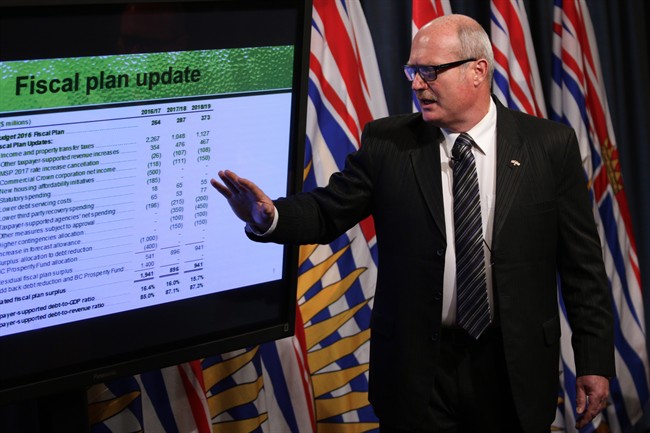
British Columbia’s sizzling real estate market helped to lift the provincial budget surplus to a expected $1.9 billion, more than $1.6 billion over the original estimate in February.

Finance Minister Mike de Jong released the numbers Thursday in his quarterly financial report and said revenues for 2016-2017 are now forecast to improve by $2.5 billion.
Government figures show the property transfer tax from real estate transactions and higher corporate income tax revenues helped boost the forecasted surplus, he said.
“We’re in this position, the envy of the country really, because we’ve taken a balanced approach and haven’t gone on spending sprees,” de Jong said.

Get breaking National news
He said much of the revenue increases are the result of about $1.5 million in personal income and corporate taxes thanks to the province’s strong economy and less than six per cent jobless rate. Property transfer tax revenues are also projected to increase by $965 million as home sales continue to fill the province’s coffers, said de Jong.
The B.C. government has been under fire much of the past year to take measures to address Vancouver’s hot real estate market, prompting the Liberals to introduce a 15-per-cent foreign buyers tax in July.
“There’s no question the market in the Lower Mainland, in Metro Vancouver, in other parts of B.C. has been growing at a pace that ultimately the government thought was unsustainable and warranted intervention,” de Jong said. “And we did.”
- B.C. First Nations explore if nuclear power could meet province’s electricity needs
- Chinese EV issue part of U.S. trade talks, Mexico foreign secretary says
- Vancouver working to avoid ‘the great sigh’ following FIFA World Cup excitement
- Port of Vancouver expansion project referred to Canada’s Major Projects Office


De Jong said the government will use $500 million from the property tax windfall to announce measures next week to help with housing affordability.
The minister said higher revenues will also allow the government to cancel a planned four per cent medical services plan premium increase originally scheduled for next year.
New Democrat finance critic Carole James said it appears de Jong and the Liberals don’t understand that many British Columbians are struggling to make ends meet after facing increased rents and housing costs and higher services fees and utility rates.
British Columbians go to the polls next spring.


Comments
Want to discuss? Please read our Commenting Policy first.