


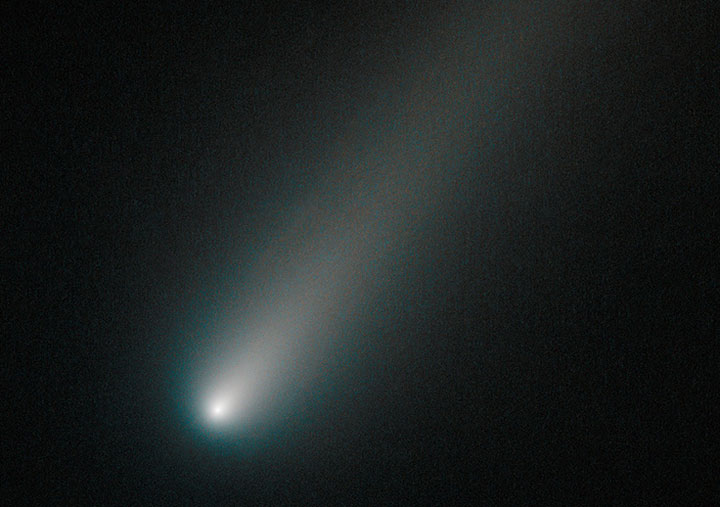
TORONTO – Comet ISON, which could be the “comet of the century” is still going strong.

A new image taken on Oct. 9 was released by the Hubble Space Telescope reveals that the comet is still heading toward the sun, intact.
There had been some speculation that the comet was breaking apart, however, the smooth head around the comet’s nucleus or core, demonstrates that the comet is intact, which is good news for astronomers, both amateur and professional.
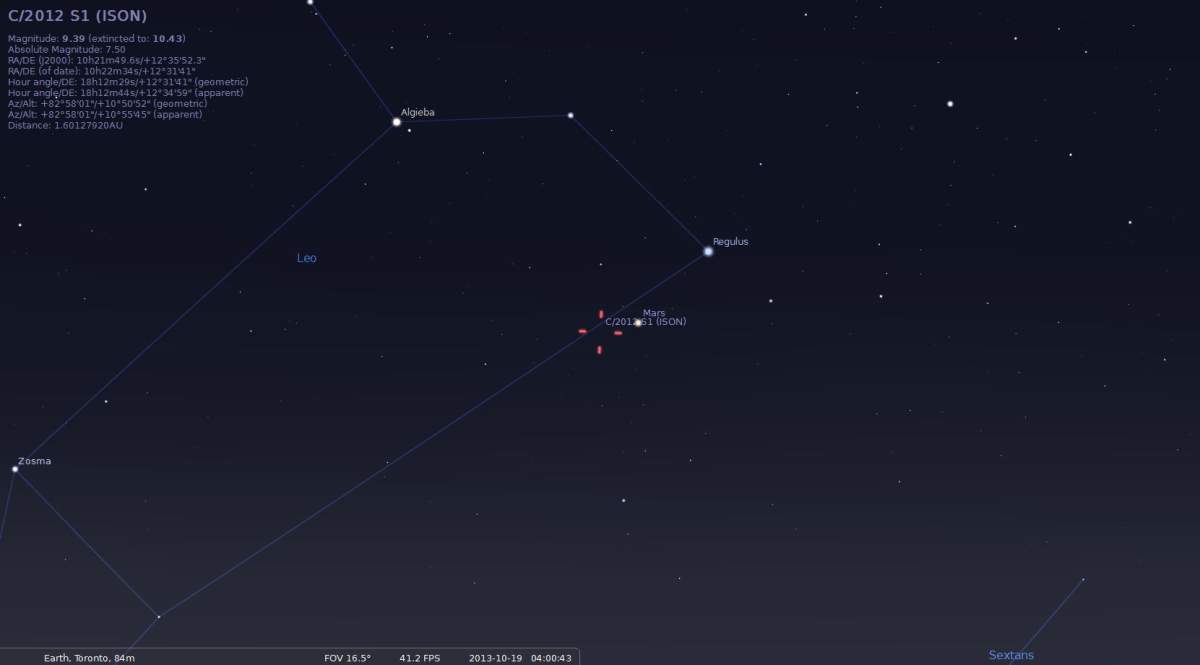
During the next few months, the comet will brighten to what many hope will be naked-eye visibility. Right now, you can only catch ISON if you’re an early riser and one with a telescope: the comet rises around 3 a.m. It isn’t bright enough to see with the naked eye, but its location is easy enough to point out: it’s right near Mars.
- Calgary area ‘very uniquely situated’ for study of hailstorms, says researcher
- New Asia Highlands exhibit, with some new species, opens at the Calgary Zoo
- Scientists find sugar in the Milky Way. It could help answer a cosmic mystery
- Meta to build $13 billion data centre in Alberta, largest outside the U.S.


ISON will pass closest to the sun on Nov. 28.

Get breaking National news
As the comet nears the sun, the solar wind blows a dust, ice and particles away from the comet, producing its tail (after ISON rounds the sun, the “tail” will be blown ahead of it).
ISON will then swing around the sun – if it survives the close encounter – and head back along its orbit.


Comments
Want to discuss? Please read our Commenting Policy first.