


TORONTO – While eastern Canada was treated to a partial eclipse early this morning, in other parts of the world, a total eclipse or an annular eclipse was visible.

A total eclipse occurs when the moon blocks out the sun entirely. An annular eclipse is when the moon doesn’t cover the entire disk of the sun. A partial eclipse occurs when the moon covers a small portion of the sun.
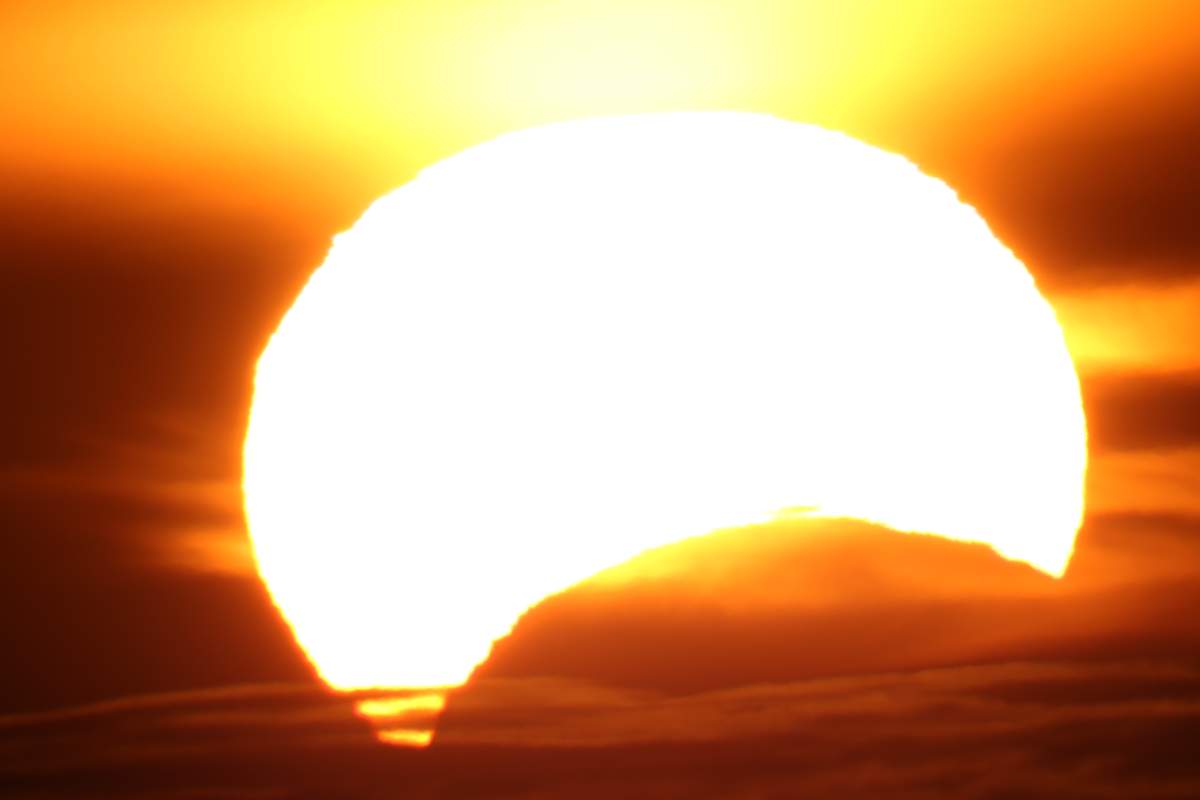
The total eclipse occurred over the Atlantic Ocean, but parts of the world were treated to either a partial, annular or total eclipse.
Read: Rare eclipse this weekend in Eastern Canada
- Calgary area ‘very uniquely situated’ for study of hailstorms, says researcher
- New Asia Highlands exhibit, with some new species, opens at the Calgary Zoo
- Scientists find sugar in the Milky Way. It could help answer a cosmic mystery
- Meta to build $13 billion data centre in Alberta, largest outside the U.S.


The next solar eclipse occurs on April 29, 2014, but will occur over Antarctica.
The next solar eclipse visible from North America, which will be a partial eclipse, will occur on Oct. 23, 2014.


Comments
Want to discuss? Please read our Commenting Policy first.