


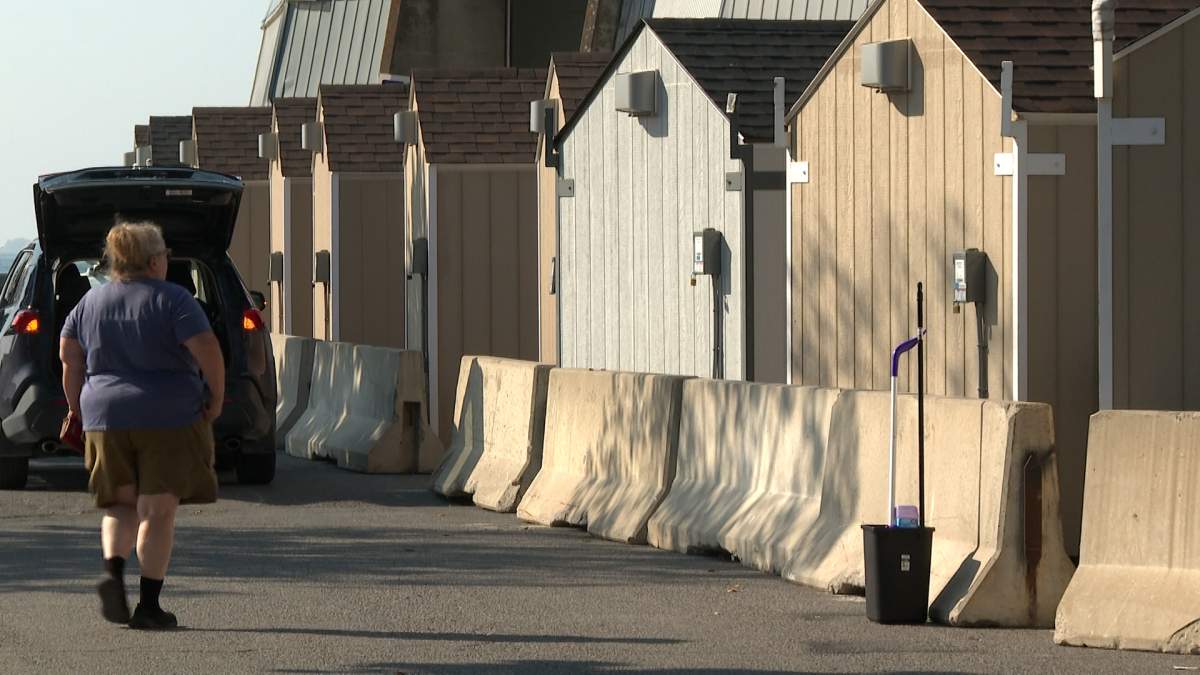
In October the sleeping cabins completed their biannual move, but according to Mayor of Kingston Bryan Paterson, that move will probably be the program’s last.

“I think what most council agreed is that we’re in a very different place now than we were a couple of years ago.”
Council voted 10-2 in favour of ending funding to the program, and while Kingscourt-Rideau Coun. Brandon Tozzo was one of the votes in opposition, he understands the reasoning.
“The results of it were quite mixed. Out of the 35 residents who had been part of the program, only six transitioned fully out of homelessness.”

Get breaking National news
In addition, he added, the program was quite expensive, costing a little under $2 million since it began. But despite all of this, Tozzo still believes it is more humane, and cheaper, than the alternative.
“The sleeping cabins were expensive, but what’s more expensive is people falling back into homelessness. It’s more burden on taxpayers to have an unhoused person using emergency services.”
- Applicants for child care operator licences in Saskatchewan say they’re being denied
- More than $500M likely required annually for Calgary to meet affordable housing targets
- First-ever Saskatchewan commodity showcase connects producers with global buyers
- Montreal-area family hopes daughter’s cancer journey inspires blood donors
-
![]() Cyclospora outbreak source not confirmed, health officials investigating link to lettuce, greens
Cyclospora outbreak source not confirmed, health officials investigating link to lettuce, greens -
![]() CN rail train drives through inferno as wildfires ravage northwestern Ontario
CN rail train drives through inferno as wildfires ravage northwestern Ontario -
![]() WestJet flight attendants vote in favour of strike
WestJet flight attendants vote in favour of strike -
![]() Immigration lawyer reacts as some “Lost Canadians” told to return citizenship certificate
Immigration lawyer reacts as some “Lost Canadians” told to return citizenship certificate


As for what comes next for the residents and the cabins themselves, Paterson said staff are going to be reporting back to council in the spring with a transition plan.
“That transition plan will include not only what the plans are for the current residents of the sleeping cabin program, but also options and ideas for how the cabins can continue to be used.”


Comments
Want to discuss? Please read our Commenting Policy first.