

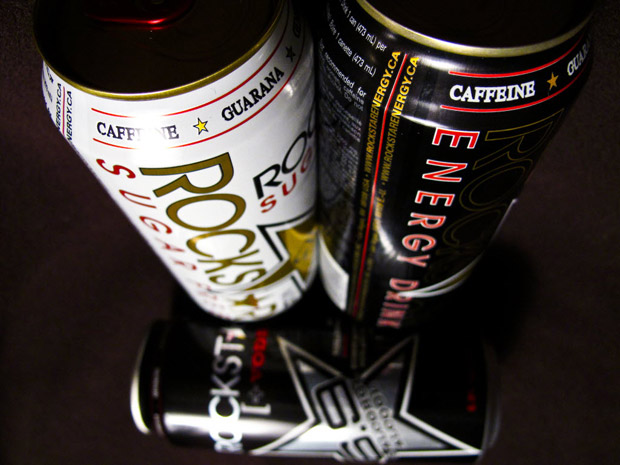
TORONTO – While Ottawa continues to mull over whether or not to ban alcoholic and some non-alcoholic energy drinks in Canada, a health board in Ontario has joined a growing number of groups calling for more regulation in the industry.
"Energy drinks are potentially dangerous and we need to treat them with caution," said Dr. Rosana Pellizzari, the medical officer of health for Peterborough, Ont.
Last month, the southeastern Ontario city’s health board sent letters to federal Health Minister Leona Aglukkaq and Ontario Health Minister Deb Matthews urging the governments to limit the marketing of these drinks to children and teenagers and to ban alcoholic energy drinks in Canada. Last year, the U.S. banned seven premixed alcoholic energy drinks because it found that caffeine was an "unsafe food additive" in these products.
Canada allows these caffeinated alcoholic drinks to be sold in liquor stores if the caffeine in them is derived from a natural source, like guarana or yerba mate.
Meanwhile, caffeinated energy drinks are sold as natural health products in convenience stores and have to meet labelling and formulaic standards before being approved by Health Canada.
The Peterborough board is concerned with the amount of caffeine contained in the popular drinks and the potential health risks they would pose to children. Although beverage companies are prevented from marketing directly to children, their advertising campaigns use social networking and event sponsorships which target young people, said Pellizzari.
In a recent report, the board found energy drinks in Canada contain up to 80 mg. of caffeine in 250 ml., more than double the amount of caffeine in most soft drinks.
Health Canada recommends children between 10 to 12 should not consume more than 85 mg. of caffeine a day.
"Children are more sensitive to caffeine than adults," said Pellizzari. "We have concerns about exposing our children to these drinks." The board has yet to hear a response from the ministers.
This past summer, the medical society of Prince Edward Island also called for more restrictions on the sale of these drinks, while the Canadian Medical Association Journal wrote an editorial pushing for them to be sold with stronger warnings on their labels.
In the meantime, Health Canada says it is still considering recommendations by an expert panel from November on how the government should deal with the burgeoning energy drink industry.
There’s no timeline on if any of the proposed changes, including a partial or full ban on energy drinks, will be implemented.
"Our government is committed to the health and safety of Canadians and is taking seriously the concerns expressed by the public health community and parents regarding caffeinated energy drinks, particularly their use by young people," Jenny Van Alstyne, a spokeswoman for Aglukkaq said in an email.
Justin Sherwood, president of Refreshments Canada, a national association representing more than a dozen beverage manufacturers across the country, said it’s clear producers are being unfairly targeted.
"The industry is highly regulated in Canada, far more than anywhere in the world," he said.
The group argues a cup of coffee can contain twice as much caffeine as an energy drink, but regulators aren’t threatening the coffee industry.
"Quite frankly, people are reacting to the marketing of these products but it’s not based on any sound science," he said.
The association does agree alcohol should never be mixed with caffeinated energy drinks, a warning that is printed on most drinks, said Sherwood.
Jonathan Howland, a public health professor at Boston University, agrees health officials should proceed cautiously with regulation because the industry is still so new and the potential ill effects from the over consumption of caffeine, along with alcohol for instance, has not been scientifically proven.
"I’m not saying that there’s no science. There have been a number of studies that found people who drink caffeinated drinks engage in more risky behaviour compared to just drinking alcohol," he said. "But we don’t know if this behaviour is causal."
A study by Howland to be published in the medical journal Addiction in February, found energy drinks do not mitigate the effects of alcohol as generally believed.
Researchers randomly chose 129 participants between 21 to 30 and put them into four groups: one consumed caffeinated beer, a second consumed non-caffeinated beer, a third consumed non-alcoholic beer and fourth consumed non-caffeinated non-alcoholic beer. The groups with alcohol had an average blood-alcohol level of 0.12 per cent.
The groups were then subject to a 30 minute driving test.
Howland found that those who drank caffeinated alcoholic drinks were not more alert than those consuming only alcohol.



Comments
Want to discuss? Please read our Commenting Policy first.