

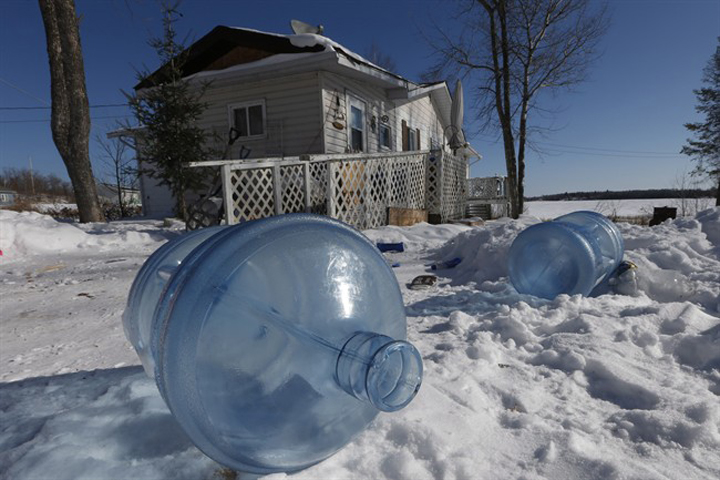
SHOAL LAKE, Ont. – A century ago, the federal government expropriated land inhabited by the Shoal Lake 40 First Nation for construction of an aqueduct to provide water to the city of Winnipeg. Band members were moved onto a man-made island.

READ MORE: The price of Winnipeg’s water: A First Nation’s misery
That decision continues to have impacts to this day as residents risk their lives on dangerous ice roads and the community finds itself under one of Canada’s longest standing boil-water advisories.

Get weekly health news
A look at Shoal Lake 40 First Nation’s struggles, by the numbers:
15.2 — The width in metres of the diversion canal which turned Shoal Lake 40 First Nation land into a man-made island.
9 — The number of people locals can remember who have died by trying to cross the lake to the island in unsafe conditions.
$30 million — The estimated amount of money it would take to build an all-weather road connecting the reserve with the mainland.
- Calgary area ‘very uniquely situated’ for study of hailstorms, says researcher
- Memorial tree at Saskatoon cemetery to be cut down due to invasive disease
- ‘Sovereignty comes with responsibility:’ U.S. lawmakers to Canada on wildfires
- Bow Glacier Falls Trail, site of two deaths in 2025 rock slide, reopens to hikers
-
![]() Ontario wildfires: Residents evacuate devastated Collins First Nation as infrastructure wiped out
Ontario wildfires: Residents evacuate devastated Collins First Nation as infrastructure wiped out -
![]() Health alerts issused as wildfire smoke continues to blanket Peterborough region
Health alerts issused as wildfire smoke continues to blanket Peterborough region -
![]() Northwestern Ontario wildfires burn buildings, trigger evacuations
Northwestern Ontario wildfires burn buildings, trigger evacuations -
![]() City of Calgary could approve more than 17 thousand new homes by 2030
City of Calgary could approve more than 17 thousand new homes by 2030


17 — The number of years Shoal Lake 40 has lived under a boil-water advisory.
$100,000 — The amount of money the reserve spends a year on bottled water.
$15 million — The estimated amount of money it would take to build a water treatment plant.
270 — The number of people still living on the reserve.
30 — The percentage of the reserve’s population left on the man-made island
READ MORE: Shoal Lake 40 First Nation under boil water advisory for 17 years


Comments
Comments closed.
Due to the sensitive and/or legal subject matter of some of the content on globalnews.ca, we reserve the ability to disable comments from time to time.
Please see our Commenting Policy for more.