


WATCH ABOVE: Blue-green algae is blooming at Pigeon Lake and some complain it’s worse than ever. As Fletcher Kent reports, some residents believe more has be done to get rid of it.

EDMONTON — While hundreds of Albertans prepare to spend the last long weekend of the summer at the lake, some who live at Pigeon Lake say they want to leave because of the unsightly and downright smelly condition of the water.
“I can’t stand it,” said David Paterson. “I want to leave. I want to hook up the trailer and go somewhere where the air is fresher and the water is cleaner.”
“It’s starting to really smell even as far as our house which is 200 yards off the lake,” added Debbie Paterson, David’s wife.
David and Debbie have owned a cabin at Pigeon Lake for years, but last year sold their house in Edmonton and moved out there permanently. Debbie spent several summers at the lake when she was a kid at her grandparents’ cottage.
But over the years, the condition of the lake has deteriorated due to blue-green algae. While blue-green algae has been present in Pigeon Lake for years, the Patersons say this year, it is by far the worst they’ve ever seen.
“The build-up on the lake has been getting worse and worse,” said Debbie.
“It’s definitely worse the end of this year. I’ve never seen it to this extent, the thickness of it.”

Get weekly health news
“When there’s no wind and it’s hotter, we’ve had some incredible odours and some fantastic colours up here on the lake that you don’t want to see on the lake,” added David.
The couple believes it’s time someone steps in to clean up the lake.
“It’s a popular recreational lake,” said Debbie. “If it gets worse it’s not going to be useable to people in the future.”
“Why do you have to wait until everything has collapsed and it’s completely ruined? That’s not our culture to just leave it rot,” said David.

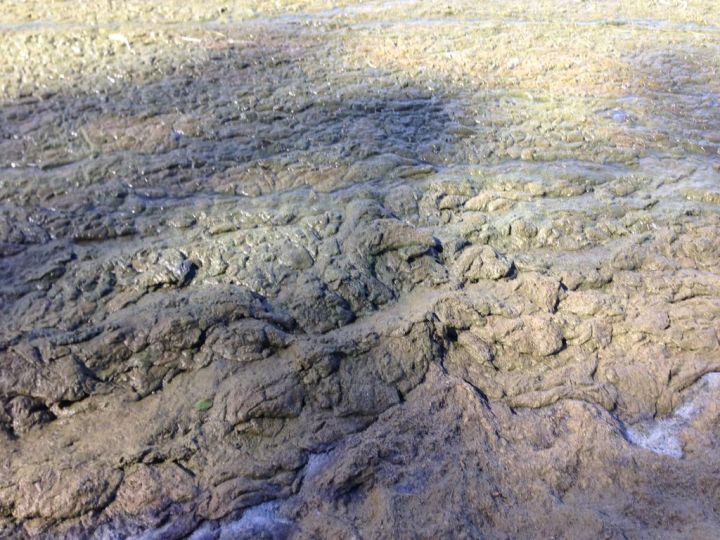

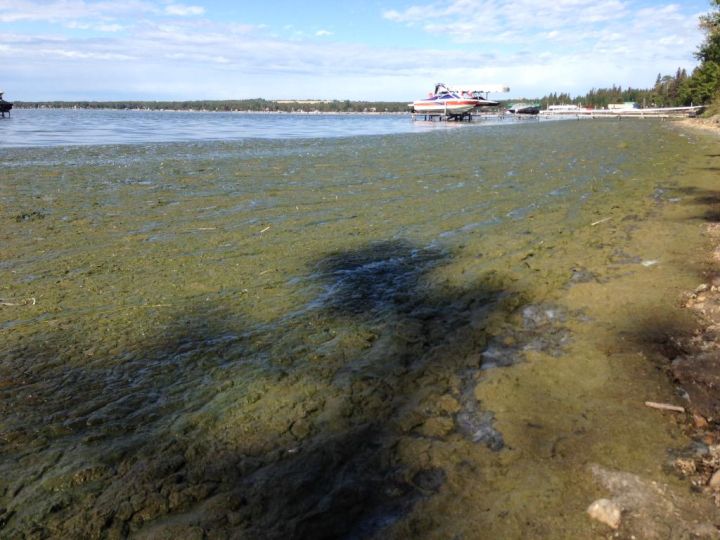

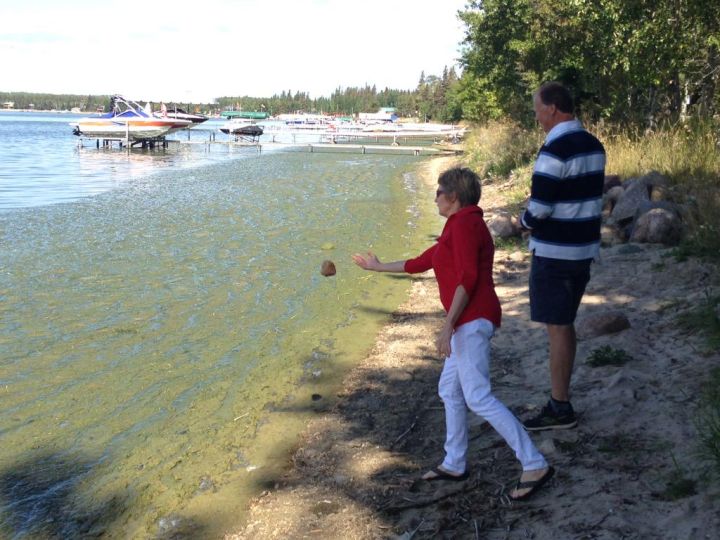
Grandview Mayor Don Davidson says nearby residents are trying to do their part to help clean up the lake; nine of the 12 surrounding communities have banned the use of fertilizer. But Davidson adds this year’s hot, dry conditions do not help the water conditions.
“On a hot, stale day the algae blooms and it floats to the surface,” he explained. “Certainly it appears that in the last few years the severity of the blooms seem to be increasing.”
Davidson says a study is currently underway at the University of Alberta to determine exactly what’s going on at Pigeon Lake.


“The type of zoo plankton that grazes on the algae is just not present in this lake and there is a very high abundance of minnows,” said Davidson.
Minnows feed on zoo plankton, and overfishing in the 1940s and 50s got rid of a lot of the jackfish and walleye population which would have eaten those minnows, Davidson added.
“In my mind, I don’t think we really understand what it happening to Pigeon Lake,” he said. “Before we take an action on this lake I think it’s important to determine what is causing the problem.”
That’s not welcome news to the Patersons who say they aren’t sure what their future holds at Pigeon Lake.
“We’re reconsidering, thinking was this a good decision or not?” said Debbie. “We can’t use the lake.”
In mid-August a contaminated water advisory was issued for Pigeon Lake because of elevated levels of fecal coliforms.
With files from Fletcher Kent, Global News.


Comments
Want to discuss? Please read our Commenting Policy first.