


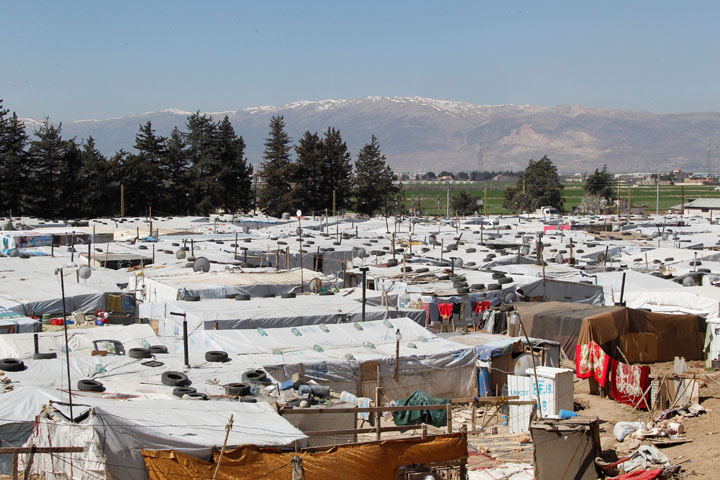
Syria refugees in Canada are “tired,” according to a refugee worker, as their home country continues to make headlines with reports of chemical weapons attacks and airstrikes.

“Every day Syrian civilians are facing atrocities and these devastating acts. And this isn’t particularly new to them,” said Krystal Thomson, spokesperson for Lifeline Syria, a group helping to resettle Syrian refugees in Canada.
But in her conversations with refugees this week, she heard something new: “What I’m hearing a lot is they’re tired. They’re tired now. It’s become fear and heartbreak.”
Tensions between Russia and the U.S.
A chemical-weapon attack by the Syrian government killed 87 people earlier this week, including many children. U.S. president Donald Trump told media he was moved by the attack on civilians — moved enough to order a missile strike against the airbase that launched the chemical attack.
In response, Russia condemned the airstrikes, raising concerns about escalating tensions between the Russians and the U.S.
READ MORE: U.S. missile strike on Syria: Here’s what we know so far
This worries Sam Nammoura, of the Syrian Refugee Support Group in Calgary. “What happened two days ago, it’s just a shockwave to see chemical weapons surfacing in Syria all over again. We thought that after 2013 this was already over, but unfortunately it’s not,” he said.
“And then still, with the bombing of the airbase in Syria, it just sends mixed messages because… Tomahawk missiles have a lot of bad memories in the Middle East… We saw what happened to Iraq, so we’re afraid this might be the beginning of something a lot worse for Syria in the coming days.”
Get breaking National news
Nammoura is afraid this has turned into a proxy war between regional and international powers.
“A lot of Syrians, they think this is not about Syria anymore. I mean, Syria has no say in this.”

Effect on refugees
The United Nations’ Secretary-General has similar concerns. “Mindful of the risk of escalation, I appeal for restraint to avoid any acts that could deepen the suffering of the Syrian people,” Antonio Guterres said in a statement.
According to the United Nations High Commission for Refugees, about 5 million people have fled Syria since 2011, with another 6.3 million people displaced within the country.
Elliot Tepper, distinguished fellow with Carleton University’s Norman Paterson School of International Affairs, said that it’s too soon to tell what the effect of the airstrike will be on civilians, and if it will lead to more people fleeing the country.
“One thing that we should all hope is that this attack will somehow change the course of the war and actually lead to peace,” he said. But if this missile attack is simply a one-off and doesn’t lead to a change in American policy, he said, then the war will continue in more or less the same way.
“It’s likely to be business as usual for [Syrian president Bashar Assad], minus sarin gas, in the near future.”

That means the refugee crisis will continue, and Canada should step up to help, said Thomson. She wants the government to expedite the processing of privately-sponsored refugee applications.
“Canadians… are ready for them, to welcome them, have housing ready for them, but the government at this point is not processing the applications as quickly as they were, so we’re really hoping that they can put more resources into clearing this backlog and welcoming as many refugees as possible.”
READ MORE: Donald Trump briefed Justin Trudeau before launching missile strikes on Syria
Syrians have mixed feelings right now, watching what’s happening in their country, Nammoura said. “A lot of Syrians, they have no clue what the end is. They want to see an end to this because as we go, there’s no hope in sight — and that’s why everyone is confused.”




Comments
Want to discuss? Please read our Commenting Policy first.