


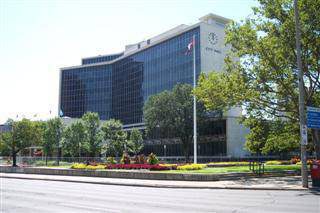
Hamilton City Council has given its final approval to the 2017 operating budget.

The result is an average 2.1 per cent residential tax increase, which works out to roughly $81 dollars on a property valued at $315,000.
There are fluctuations due to municipal property value reassessments, with homes within the “old city” of Hamilton generally above the 2.1 per cent average and suburban communities somewhat lower than that percentage.

Get breaking National news
Coun. Tom Jackson notes that it’s been a long and difficult process which has included “reigning in” the municipal workforce, “reducing the complement by about 84 jobs.”
Hamilton Mayor Fred Eisenberger agrees that it’s been a “much more difficult” process than usual, adding that the conclusion “balances the needs of the taxpayers” with “the services that we’re looking to provide in our community.”
The final budget does not include $83,000 for a police and bylaw team to answer overnight noise complaints on Thursdays, Fridays and Saturdays.
- Ontario PC MPPs who spent big on hotels face questions as minister resigns
- 2 Saskatchewan research farms to stay open as province enters MOU with Ottawa
- How Canada helped in past U.S. wildfires as Ford says some are ‘chirping’
- Nenshi seeks Calgary seat in next election as Estabrooks vies for Edmonton-Strathcona


Ancaster Coun. Lloyd Ferguson, who chairs Hamilton’s police board, will try to get police to pay for that service when he moves a motion at Thursday’s board meeting.
Hamilton City Council has also given final approval to the mayor’s poverty reduction strategy.
It was initially approved by the general issues committee last week, earmarking $50 million over 10 years to the “supply and quality of affordable housing”.
The strategy will be paid for using future fund and hydro dividend monies.


Comments
Want to discuss? Please read our Commenting Policy first.