





The Chippewas of the Thames suffered more than a major legal defeat when the Supreme Court of Canada dismissed its appeal of Enbridge’s Line 9 pipeline expansion.

The court ruling also means the First Nation will have to pay Enbridge’s legal bills.
READ MORE: Dismissed appeal into pipeline project ‘disappointing’, says Chippewas of Thames First Nation Chief
“They were able to run tar sands throughout the whole litigation process and create profit while this was going on,” said Chief Myeengun Henry.
“Chippewas of the Thames First Nation were fundraising to pay our legal bills.”

Get daily National news
The Supreme Court of Canada ruled Wednesday morning that the National Energy Board did an adequate consultation with First Nations communities by reaching out to potentially impacted groups with notice about their hearing, inviting their participation.
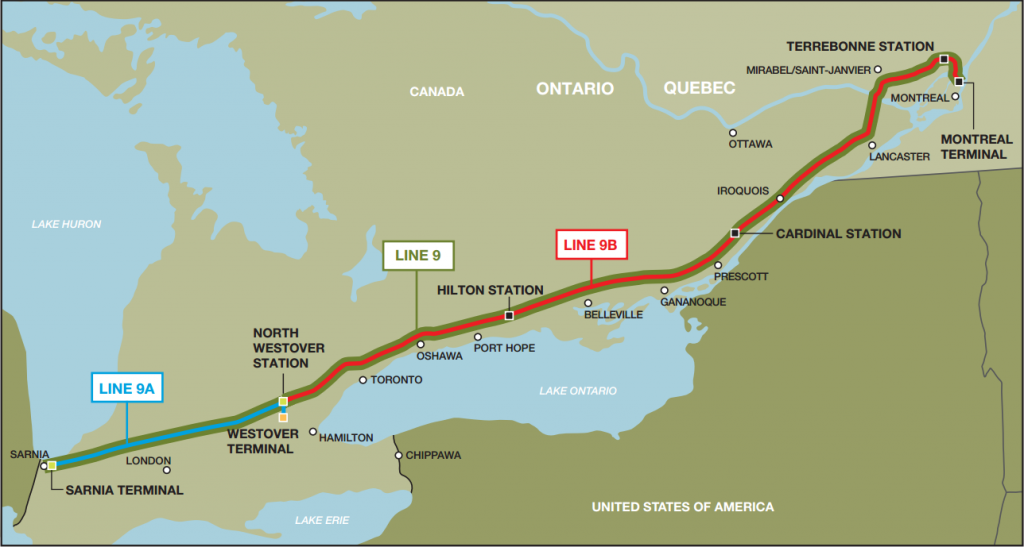
By dismissing the appeal, Canada’s top court has seconded NEB’s decision to give Enbridge the green light to reverse the flow of oil and increase the capacity of its Line 9 pipeline, between Sarnia and Montreal.
- Osoyoos Band seeks return of sacred sites in discussions with B.C. government
- Record turnout expected for Penticton Peach Classic Triathlon, boosting local economy
- Mom and 1-month-old baby missing in northern B.C., not seen since July 9
- Hoekstra says Trump serious about tariff threat over wildfire smoke


Legal bills for the Chippewas of the Thames are still being calculated but are estimated at $600,000; fundraising efforts have so far raised roughly $200,000.
“In two sections of this, the government of Canada watched this process go on and — knowing that there were costs associated with it — never intervened,” Henry added.
“But when it comes to a proponent making these charges to a First Nation, I think the optics of that is totally terrible.”
The total amount of Enbridge’s legal bills is not yet known. Henry plans to meet with Enbridge representatives to get more information.


Comments
Want to discuss? Please read our Commenting Policy first.