

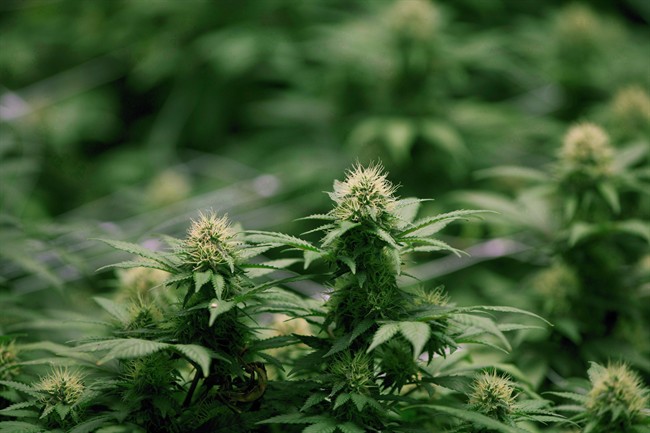
TORONTO – As the federal government moves to legalize marijuana for recreational users later this year, Ontario’s latest budget sheds light on the province’s approach to sales, distribution, enforcement and revenue expectations.

– The Ontario Cannabis Retail Corporation, an LCBO subsidiary created to manage sales and distribution of recreational pot in the province, is not expecting to generate profits immediately after legalization. It is expecting an $8-million loss in 2017-2018, followed by a $40-million loss in 2018-19, largely due to initial startup costs to establish the retail network. By 2019-20, the province is forecasting OCRC net income of $35 million, followed by $100 million in net income by 2020-21.
– In a bid to crack down on the black market for marijuana in Ontario, the provincial government is creating a Cannabis Intelligence Co-ordination Centre to shut down illegal storefronts.
READ MORE: Ontario budget 2018: 5 things to know
– The province will create a specialized legal team to support drug-impaired driving prosecutions. As well, it plans to fund sobriety field test training for police officers to help detect impaired drivers.
READ MORE: Ontario budget 2018: Here’s what you need to know about the Liberals’ drug and dental plan
- B.C. First Nations explore if nuclear power could meet province’s electricity needs
- Hoekstra says Trump serious about tariff threat over wildfire smoke
- Ontario PC MPPs who spent big on hotels face questions as minister resigns
- 2 Saskatchewan research farms to stay open as province enters MOU with Ottawa


– Ontario will be providing municipalities with $40 million over the first two years of legalization to help with the costs of dealing with recreational pot. The Ontario Cannabis Legalization Implementation Fund will be funded by Ontario’s portion of the federal excise duty on recreational cannabis, at 75 per cent.
– Ontario plans to apply the full Harmonized Sales Tax, at 13 per cent, to off-reserve purchases of recreational cannabis by a Status Indian, band or band council, similar to tobacco and alcoholic beverages. However, off-reserve purchases of medical cannabis from a licensed producer will continue to be eligible for a rebate of the eight per cent provincial portion of the HST.


Comments
Want to discuss? Please read our Commenting Policy first.