


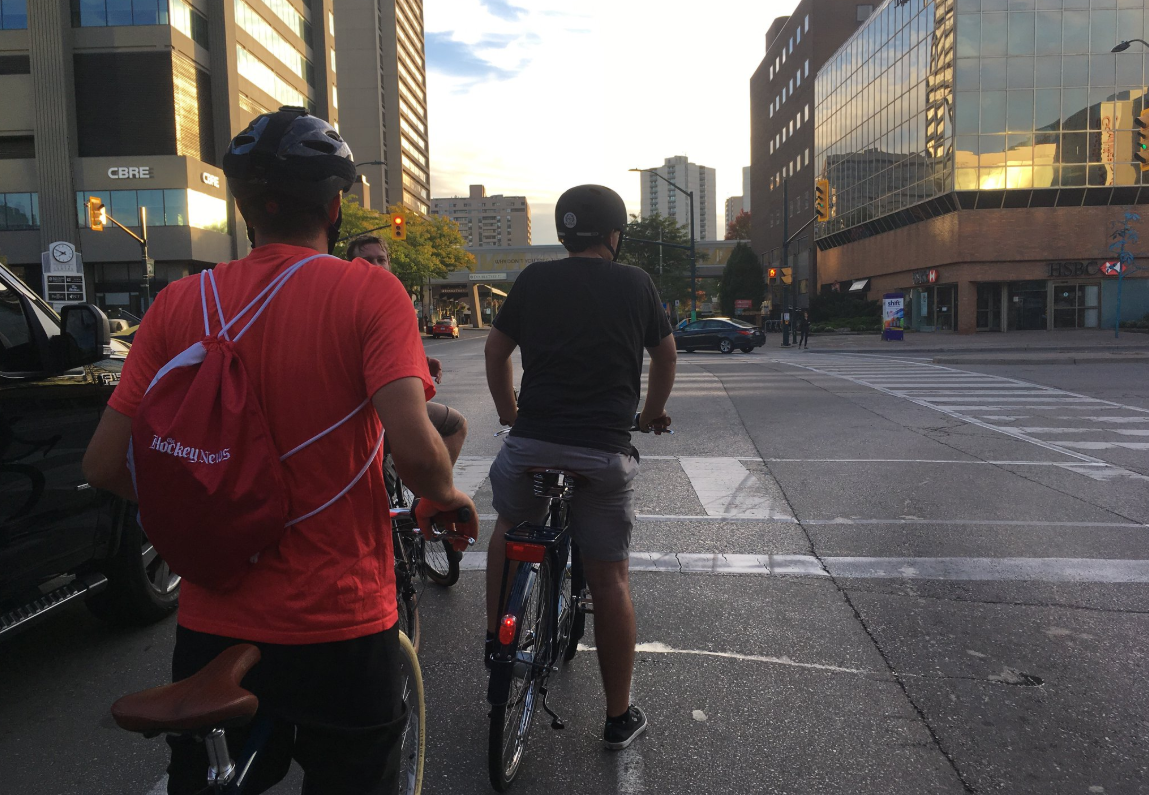
A network of protected bike lanes would encourage more people to cycle in London, says one cycling advocate.

But Ben Cowie, the owner of the London Bicycle Cafe, said protected bike infrastructure is noticeably absent from the city’s 2016 Cycling Master Plan, and its 14 strategic points.
Instead, strategic points highlight the development of a wayfinding strategy, establishing routes for the winter and for tours of naturally and culturally significant areas, bike sharing, bike parking, and establishing an online presence.
Strategic point number 11 is “designing and implementing crossings and transitions,” the objective of which is to “provide direction on the design and implementation of cycling infrastructure at locations where crossing enhancements are needed or where there are clear points of transition between different types of cycling facilities,” (such as off-road paths to on-road routes.)
But Cowie said that infrastructure won’t encourage a broader demographic of cyclists unless it’s protected.
“There’s only one thing that matters to get more people, and different people riding, and making it comfortable for high school students to bike to school. And that’s to build protected bike infrastructure.”
This summer, the city celebrated 900 metres of northbound and southbound cycle tracks on Colborne Street. Cowie considers it a missed opportunity. Painted green lanes, cement blocks to act as buffers, and bollards are a good start in making cycling along the road safer, but that protection is lost at intersections.
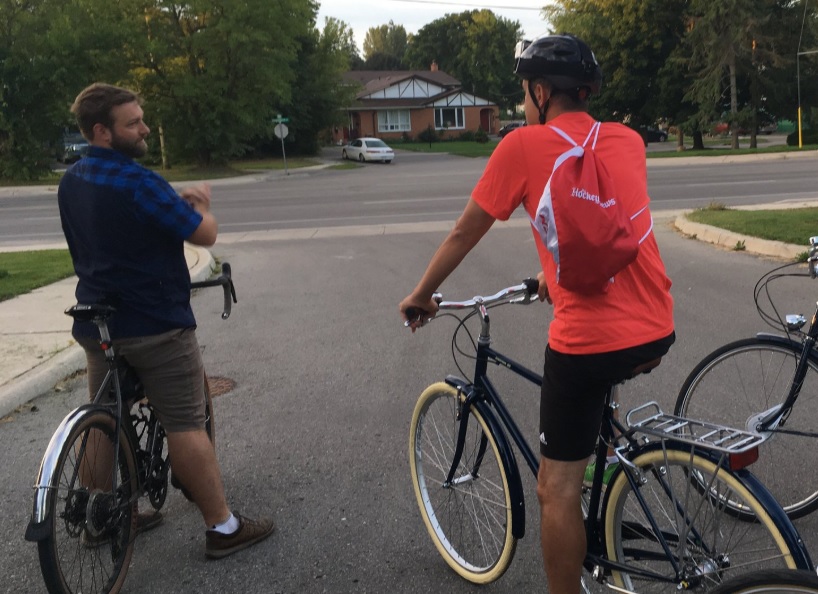
Cowie organized a bicycle ride for members of the media Monday and showed how cyclists have to merge with traffic in the intersection if they’re heading south on Colborne Street at Horton Street, where the protected lane ends.
“That’s an illegal move in every traffic guideline ever. We committed an illegal manoeuvre, by design. It’s designed to force us to make that uncomfortable merge.”
Get breaking National news
At the other end of the protected lanes, a green painted box dubbed a “bike box” lets cyclists travelling north at Queens Avenue pull ahead of stopped traffic, allowing them the first shot at turning left as though they were in a vehicle.
“I always feel uncomfortable, sitting out, kind of like we did at Queens and Colborne,” said Cowie, speaking with 980 CFPL’s Mike Stubbs, who participated in Monday’s ride. “We were sitting out in the middle of the intersection. Cars were passing us on our left and our right. It just felt really vulnerable.”


The solution to this would be protected intersections, to go with the protected bike lanes, said Cowie. The idea features islands that separate cyclists from drivers at the four corners, and is already being implemented in Ottawa, he said.
Transportation planning and design manager Doug MacRae says London considered protected bike lanes while designing the Colborne Street cycle track, but “the design of protected intersections here in Ontario is just starting to evolve.”
The concept comes from The Netherlands, and Ontario poses “unique challenges” such as plowing snow, said MacRae.
“The provincial manual for design of cycling infrastructure is currently being updated, and it’s looking specifically at that concept.”
It’s possible the city considers protected intersections, as it works on creating an east-west bike corridor that connects downtown London with the east end of the city. But not until it’s in the manual, explained MacRae.
“There’s risk in creating something, without proven experience, with all good intentions. The result may not be as anticipated.”
On Monday, four cyclists have been struck in separate incidents in the Greater Toronto Area (GTA).
In London this year, Melvin Hodgins was struck and killed while riding a bike on Adelaide Street in June, and Thomas Ha was struck and killed while riding a bike on Dundas Street in January.
London is currently evaluating four options its east-west bike corridor. The possible routes are Dufferin Avenue from Ridout Street to Adelaide Street North then Lorne Avenue from Adelaide Street North to Charlotte Street, Dundas Street from Ridout Street to Egerton Street, York Street from Ridout Street to Rectory Street, and Queens Avenue and King Street Couplet from Ridout Street to Egerton Street.


Comments
Want to discuss? Please read our Commenting Policy first.