






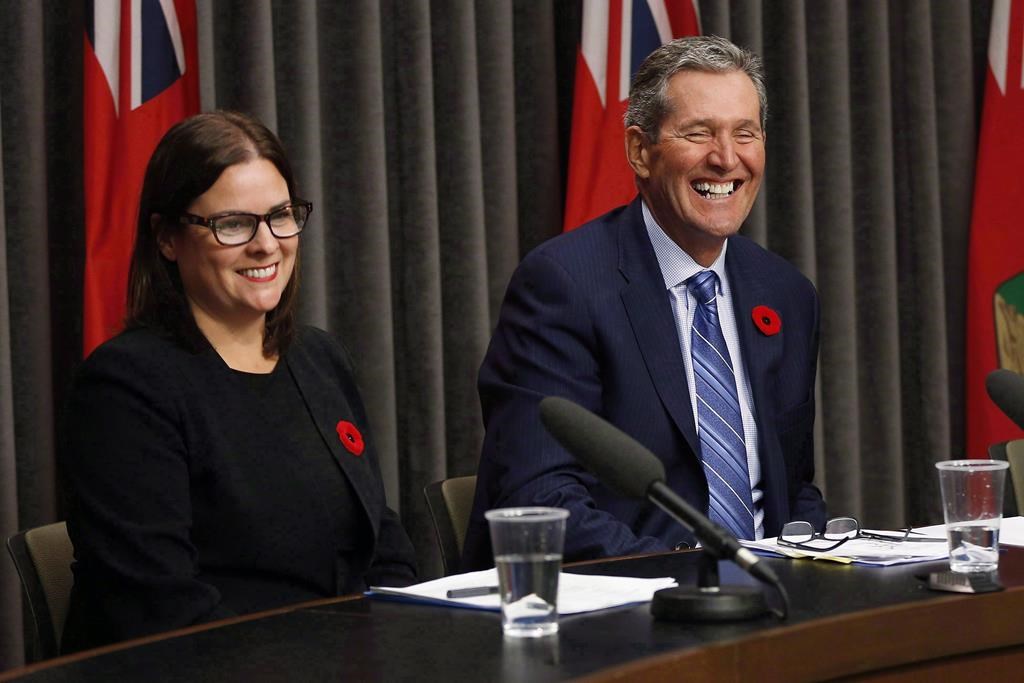
The welfare system in Manitoba could be up for a revamp in the upcoming provincial budget, but one community organizer with the Social Planning Council of Winnipeg says Premier Brian Pallister’s mandate letter on the topic is “concerning.”

Josh Brandon told 680 CJOB that there are about 72,000 Manitobans currently on welfare – just over 40,000 cases by household – and that most of those people would love to get off social assistance.
“Most people that I know that rely on social assistance,” Brandon said. “They really depend on the system, but they do want to get into employment if they have the opportunities.
“Not to say that there shouldn’t be reforms to the system, but the tone of that letter was concerning, because it suggests there’s too many Manitobans just looking for a free ride and that civil servants aren’t working hard enough to do their jobs to find resources for people.”
READ MORE: Manitoba premier touts private-sector involvement, changes to social assistance in mandate letters
Pallister’s mandate letter, written to Families Minister Heather Stefanson (Tuxedo) and made public Wednesday, asks to “reduce dependence on government” by getting more people off welfare and back into the workforce.

Get daily National news
The letter asks the minister to work on “transforming the Employment Income Assistance (EIA) Program from a benefit that
encourages dependency on government to one that provides a short-term bridge to meaningful employment,” and “putting employable Manitobans and young people on a path of discipline, responsibility, training and jobs.”
Pallister told Global News last week that his reforms are targeting able-bodied Manitobans who can work and may need a helping hand or a nudge to do so.
“We want to make sure that we have a system that isn’t encouraging people to rely on the state when they can become, frankly, more reliant on themselves,” he said.
“Or it may mean simply changing the culture within our own civil service so that we ask the question, ‘What’s the problem?’ when somebody comes in, instead of handing them a cheque and watching them walk away.”
Brandon said that’s easier said than done, and that people need better training and education to get jobs that will actually take them out of poverty.
- B.C. First Nations explore if nuclear power could meet province’s electricity needs
- Chinese EV issue part of U.S. trade talks, Mexico foreign secretary says
- Vancouver working to avoid ‘the great sigh’ following FIFA World Cup excitement
- Port of Vancouver expansion project referred to Canada’s Major Projects Office


“We need to have government lead by providing the resources necessary to make sure that everybody has those opportunities,” he said, adding that the current minimum wage of $11.65 an hour isn’t enough to really make an impact.
“That’s a poverty wage here in Manitoba.
“It really needs to be at least $15 an hour to get people out of poverty… so that working is a real route out of poverty and a better standard of living for people.
“If we did that, that would give people more incentive and give people encouragement.”



Comments
Want to discuss? Please read our Commenting Policy first.