



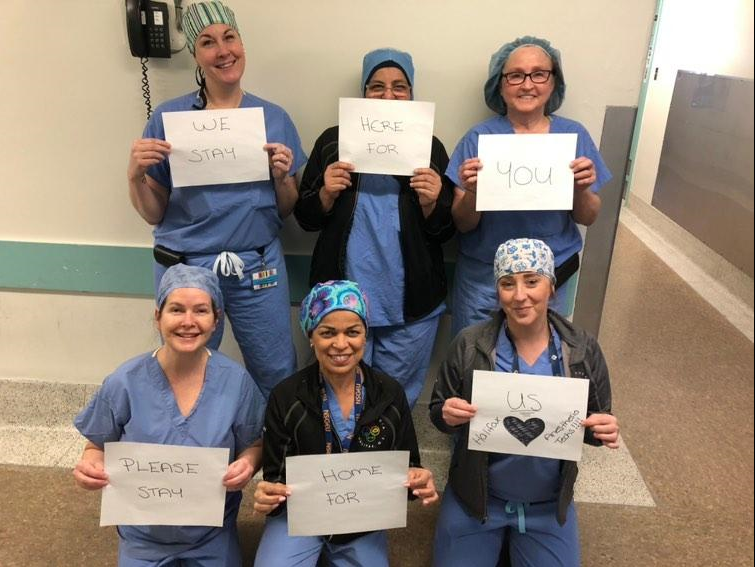
In the 12 years Kaylee Hermiston has worked in Nova Scotia’s health-care system, never has she experienced anything like the past week and a half.

“It’s very eerie,” said Hermiston, who works as an anesthesia technician at the Halifax Infirmary and Victoria General Hospital. “Just the unknown of what’s going to come, or might come, or not come.
“But it’s amazing to see how as a team … we’re all just working together to try and be there for each other.”
As of Tuesday, there are 51 confirmed cases of the novel coronavirus in Nova Scotia. Two of the patients needed to be hospitalized, and one has since been released.
As that number grows, hospitals across the province are gearing up for the worst.
Part of that preparation process, Hermiston says, needs to come from outside of the hospital – and she says the message isn’t completely getting through.
“You see so many people out and about, and they don’t understand what could happen,” said Hermiston. “We could easily be Italy or the United States.

Get weekly health news
“Even though we’re a small province, it could spread through here.”

That’s why Hermiston and her team decided to join a chorus of health-care workers by holding up signs relaying a simple message: “We stay here for you, please stay home for us.”
Hermiston says they wanted to bring that message to Nova Scotia before it’s too late.
A similar photo was posted on Facebook by the operating room staff at the Halifax Infirmary. It has since been shared over 2,400 times.


“It’s hard for people to stay home, especially when it’s a nice day and you want to be outside and be active, but unfortunately that’s what we need right now,” said Hermiston.
Hermiston says many people are looking for different ways to help. She says there are three ways you can do that: Wash your hands, help those who need it most, and, of course, stay home.
Questions about COVID-19? Here are some things you need to know:
Health officials caution against all international travel. Returning travellers are asked to self-isolate for 14 days in case they develop symptoms and to prevent spreading the virus to others.
Symptoms can include fever, cough and difficulty breathing — very similar to a cold or flu. Some people can develop a more severe illness. People most at risk of this include older adults and people with severe chronic medical conditions like heart, lung or kidney disease. If you develop symptoms, contact public health authorities.
To prevent the virus from spreading, experts recommend frequent handwashing and coughing into your sleeve. They also recommend minimizing contact with others, staying home as much as possible and maintaining a distance of two metres from other people if you go out.
For full COVID-19 coverage from Global News, click here.


Comments
Want to discuss? Please read our Commenting Policy first.