


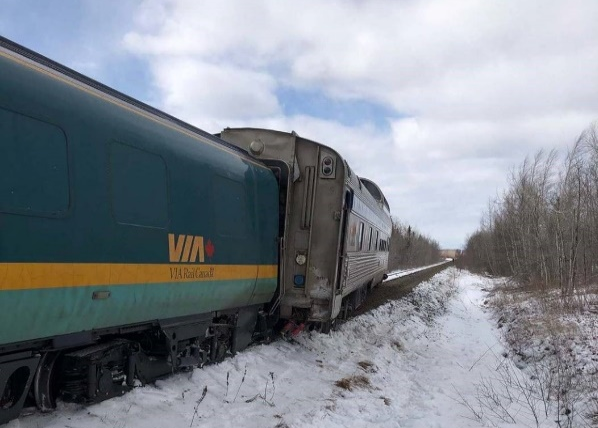
The Transportation Safety Board of Canada has released a report saying a corroded rail at a crossing caused the 2019 train derailment near Coal Branch, N.B.

The train was travelling eastward on a CN Newcastle railway and crossing over Lakeville Road when the last two passenger cars derailed upright, the report says.
The report says the rail on the Lakeville Road crossing broke beneath the train. The rail “had thinned due to corrosion to a point where it could no longer support normal train forces,” the report says.
Due to environmental conditions and winter road salt, the rail web corrosion progressed and was not identified by visual or ultrasonic track inspections, according to the report.
“If rail web thinning due to corrosion is not assessed at appropriate intervals … (it) can go undetected, increasing the risk of an in-service failure.”
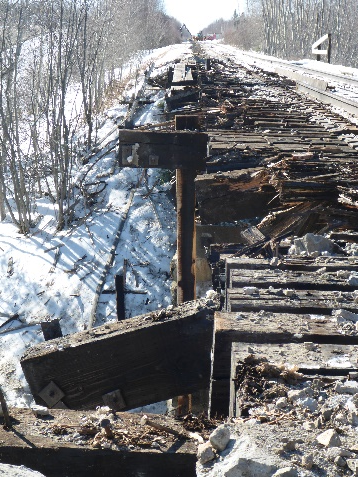
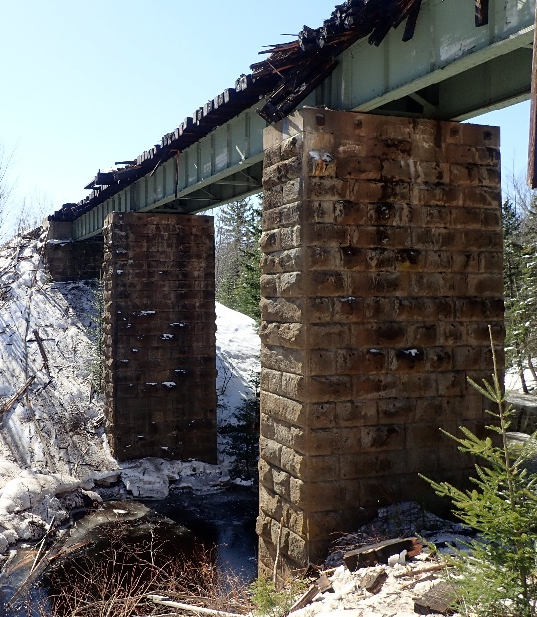
The report says the train travelled around a mile before coming to a full stop after the derailment of train cars 13 and 14.
It says the emergency brake was not triggered by the train or an occupant in one of the two cars.
- Inflation cooled to 2.8% in June as gas prices fell, says StatCan
- Trump threatens tariffs over wildfire smoke again after meeting with Carney
- Remains of dinosaur skull found in B.C. campground belonged to T. rex ‘great-uncle’
- Close to 200 wildfires are active in northern Ontario, as communities evacuate


Get breaking National news
“The occupants, who had braced themselves against secured appliances to avoid being thrown around, were unable to reach any of the car’s emergency brake handles,” the report said.
The locomotive engineer was unaware that the last two cars had derailed until the dragging forces of the derailed cars started to slow the train down. Once aware, the operating engineer pulled the brakes.
Five passengers were evacuated by a single present employee and there were no serious injuries to passengers.

One of the report’s findings states that no on-board derailment detection systems are currently in use in Canada.
It also says the board is concerned that track inspection requirements at railway crossings do not include assessing the rail web for corrosion.
“There may be rail web corrosion at other crossings, which could result in in-service rail failures,” the report said.


Comments
Want to discuss? Please read our Commenting Policy first.