


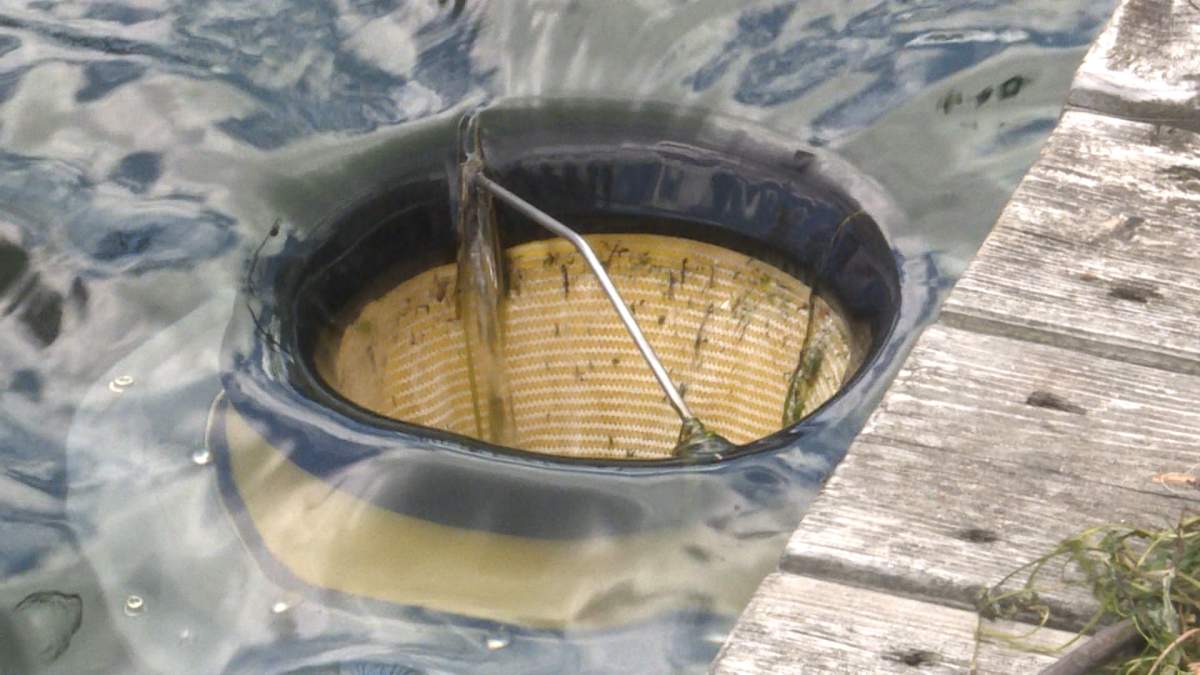
The City of Kingston has started a new pilot project that aims to clean up the city’s waters in Lake Ontario.

Two ‘seabins’ have been installed — one at Portsmouth Olympic Harbour and another at Confederation Basin.
The two seabins act almost like a floating trash can, skimming the surface of the water.
“It’s incredible, and if you can picture it, it’s a bit like a Roomba on water,” says Amy Gibson, manager of recreation services.

Get daily National news
These seabins collect macroplastics and microplastics from the water and keep the plastics trapped so marine staff can take them out.
Read more: Microplastics are in our drinking water, but are of ‘low concern’ for human health, WHO report says
Marine staff will upload the data on what has been collected daily, and an in-depth analysis will be conducted every two to three months by researchers at Queen’s University.
- Calgary area ‘very uniquely situated’ for study of hailstorms, says researcher
- Memorial tree at Saskatoon cemetery to be cut down due to invasive disease
- ‘Sovereignty comes with responsibility:’ U.S. lawmakers to Canada on wildfires
- Bow Glacier Falls Trail, site of two deaths in 2025 rock slide, reopens to hikers
-
![]() Ontario wildfires: Residents evacuate devastated Collins First Nation as infrastructure wiped out
Ontario wildfires: Residents evacuate devastated Collins First Nation as infrastructure wiped out -
![]() Health alerts issused as wildfire smoke continues to blanket Peterborough region
Health alerts issused as wildfire smoke continues to blanket Peterborough region -
![]() Northwestern Ontario wildfires burn buildings, trigger evacuations
Northwestern Ontario wildfires burn buildings, trigger evacuations -
![]() City of Calgary could approve more than 17 thousand new homes by 2030
City of Calgary could approve more than 17 thousand new homes by 2030


“While many people appreciate Kingston’s waterfront, pollution continues to be an issue throughout the Great Lakes,” says Gibson.
“Researchers estimate that 10 million kilograms of plastics enter the Great Lakes every year, polluting the lakes and surrounding watersheds, which is something that could cost up to $400 million annually to combat.”
Kingston is one of several municipalities along the Great Lakes to implement this technology, as part of Great Lakes Plastic Cleanup’s Little Bits, Big Problem initiative.


Comments
Want to discuss? Please read our Commenting Policy first.