

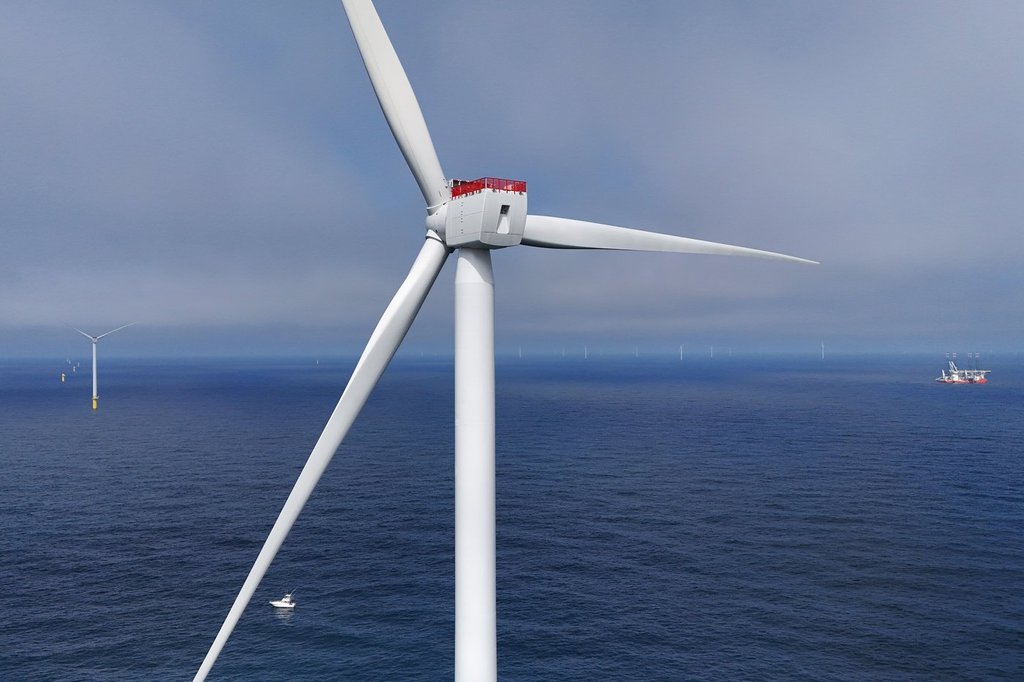
Development of Canada’s first offshore wind farms took a significant step forward late Friday when Nova Scotia’s offshore energy regulator released the names of companies qualified to bid on seabed licences.

The Canada-Nova Scotia Offshore Energy Regulator identified five companies and two groups of companies that won approval after taking part in a review process between October 2025 and January of this year.
The eligible companies were required to meet certain financial, technical, legal and social criteria to prove they are capable of completing offshore wind projects.
The regulator, however, said the companies that met eligibility requirements had the option of keeping their status confidential, which means the names of some participants may remain a secret at this stage.
Meanwhile, the federal-provincial agency confirmed a formal call for bids will be issued some time later this year. And those bids will be subject to ministerial reviews at the federal and provincial levels.
So far, the approved companies are based in Canada, Belgium, China, Ireland, Luxembourg, Singapore, Switzerland, South Korea and France.
In January, a spokesman for one of the companies, Q Energy France, said its estimated timeline for commissioning offshore turbines would be sometime in 2035.

Get breaking National news
Nova Scotia Premier Tim Houston issued a statement Friday saying the province had taken another step toward becoming an energy leader on the world stage.
“By attracting companies with the experience and know-how to deliver large energy projects, we are setting the stage for a successful offshore wind industry here at home,” Houston said.
“This kind of growth will move us from a have not to a have province and create many new opportunities for our young people, small businesses and communities.”
In June 2025, Houston said the province’s plan to license enough offshore wind farms to produce five gigawatts of electricity would be increased eightfold to 40 gigawatts, well beyond the 2.4 gigawatts Nova Scotia needs.
He called on Ottawa to help cover the costs of the Wind West project, saying the excess electricity could be used to supply 27 per cent of Canada’s total demand. Quebec and Massachusetts have already shown interest in buying electricity from this proposed clean energy megaproject.
The provincial government says the first phase of Wind West is estimated to cost about $60 billion and would produce about five gigawatts of power as early as 2033. About $40 billion would be for turbine infrastructure, with another $20 billion for new transmission lines.
-
![]() Cyclospora outbreak source not confirmed, health officials investigating link to lettuce, greens
Cyclospora outbreak source not confirmed, health officials investigating link to lettuce, greens -
![]() CN rail train drives through inferno as wildfires ravage northwestern Ontario
CN rail train drives through inferno as wildfires ravage northwestern Ontario -
![]() WestJet flight attendants vote in favour of strike
WestJet flight attendants vote in favour of strike -
![]() Immigration lawyer reacts as some “Lost Canadians” told to return citizenship certificate
Immigration lawyer reacts as some “Lost Canadians” told to return citizenship certificate


The plan to produce up to 40 gigawatts of electricity says commissioning could happen by 2050.
The ocean areas under consideration for the first phase include Sydney Bight, northeast of Cape Breton in the Gulf of St. Lawrence. Three more parcels can be found off the eastern shore of mainland Nova Scotia.
The following qualified companies and business alliances consented to to having their names released:
— DEME Concessions Wind N.V., based in Belgium.
— Ming Yang Smart Energy Group Ltd., based in China.
— Northland Power Inc., based in Toronto.
— Simply Blue Energy (OSW) Ltd., based in Ireland.
— Jan De Nul N.V., based in Luxembourg.
— A group that includes Halifax-based DP Energy Canada Ltd., Enterprize Energy Atlantic Pte. Ltd. in Singapore, Nova East Wind Inc. in Halifax, and SBM Renewables Holding SA, based in Switzerland.
— A group that includes Hanwha Ocean Co., Ltd., based in South Korea, and Q ENERGY France SAS.
This report by The Canadian Press was first published June 27, 2026.
This is a corrected story. A previous version incorrectly stated that six companies and two groups of companies had been approved to submit bids. In fact, the five companies and two groups have won approval.


According to gemini, approximately 15,000 oto 45,000 gallons of diesel would be required just for the initial assembly base on data from previously completed projects.
Now how much does the cost of diesel vary over the course of contructing an array of turbines?
Question: how much diesel does it take to ship the pieces offshore to build and then maintain a single turbine?
Anyone?
Wind turbine is to expensive and does not save money. Ask England how it worked for them. How hi have the people bills have went up.
I would like to see the total amount of GHGs produced in construction and production of one windmill from start to finish. Included everything. From the petroleum used to make plastic to coat the wiring, mining all the necessary materials to the diesel the ships will burn dragging these things out to sea.
To ‘no one special’.
“About 2,000 birds have died in the GTA in the last month flying into buildings”
Wind farms do present a hazard, but they represent a tiny fraction of the birds killed annually in other ways, like flying into buildings or caught by prowling house cats, which past studies have estimated kill up to 988 million3 and 4 billion4 birds each year, respectively.
Should we tear down tall buildings and eliminate cats?
Also, if you can’t use your real name then your comment is negligible.
“took a significant step forward late Friday when Nova Scotia’s offshore energy regulator released the names of companies qualified to bid on seabed licences.
Another delay due to bureaucracy and ‘piddling around’ over who has what authority.
When all is said and done, more will be said than done!
11 years and now they want to pretend to care about clean energy.
Too funny.
Sad move Canada. These have proven to be an environmental disaster where ever installed already.
Wind farms lol
Bought from a factory in China which is ran by coal.
Canada isn’t real
Residents should be prepared for dead birds washing up on shore. Forget your whale watching, God knows how it affects them. These bird blenders are evil things.
About time! Now let’s get some farms going on the west coast. And, just as important, let’s build some grid storage to supplement the wind and solar resources.
sad day for the environment. Look at any wind farm and you will see many towers and huge fans disrupting the skyline. Hazards to navigation if you put them at sea.