


They say if you don’t like the weather in Alberta, wait five minutes — and the rapid changes in conditions this summer have the province living up to its reputation.

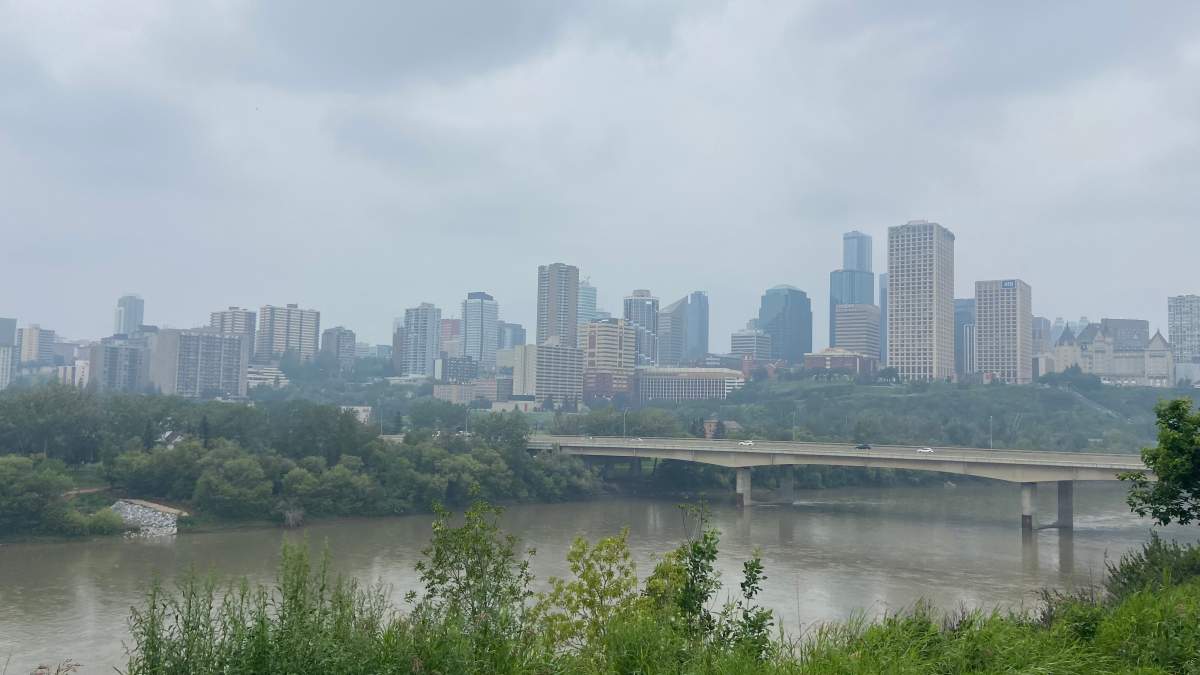
From hot and muggy to torrential downpours, it’s been a dramatic few weeks of weather in Alberta and now, a condition Edmontonians had hoped to evade has rolled in.
Wildfire smoke is now drifting down from the Northwest Territories and rapidly affected air quality.
There are 202 active fires burning in the N.W.T. as of 2 p.m. Monday, covering more than 777,000 hectares — an area greater than Edmonton city limits.
All but seven of those fires are raging out of control and warm, dry and windy conditions across the Northwest Territories are expected to increase wildfire risk. The largest of the fires, near Fort Simpson, has been burning since June 26 and is now 55,403 hectares in size.
Environment Canada issued an air quality warning just before noon Monday for all of Alberta north of Red Deer, saying air quality and visibility can change rapidly over short distances and from hour to hour.
In Edmonton, where the smoke is expected to remain through Tuesday, the Air Quality Health Index — or AQHI — was slated to hit 10+ by Monday afternoon.
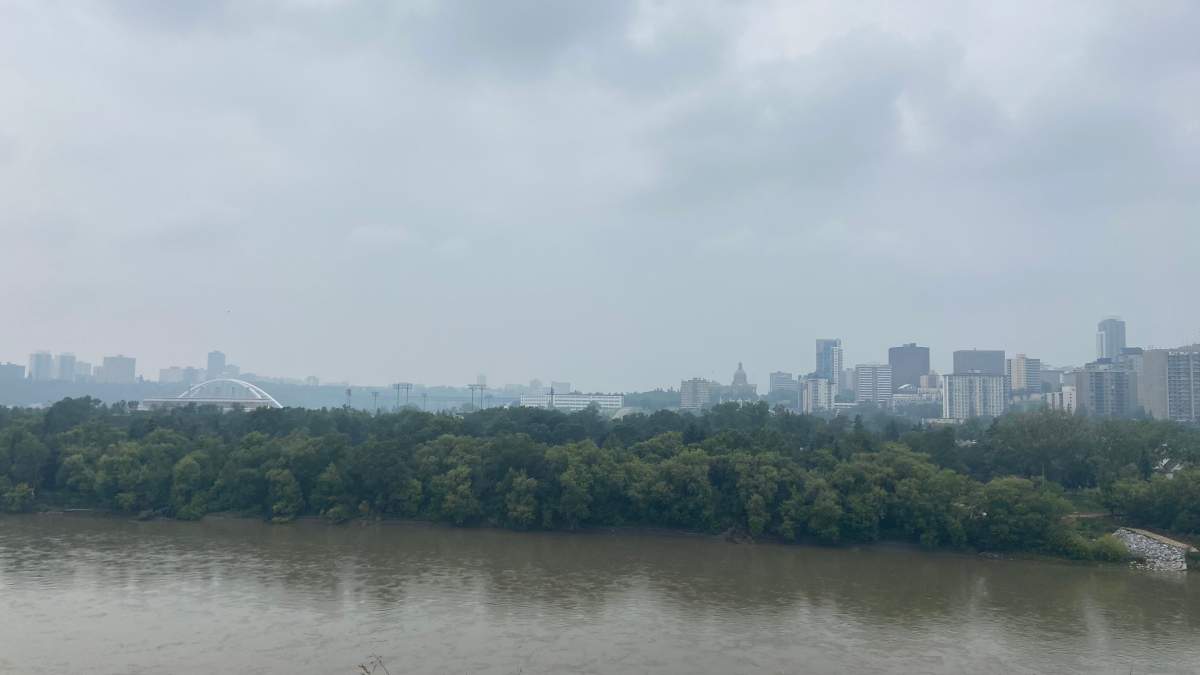
The AQHI indicates the level of pollution in a community. A rating of 1-3 is low risk, 4-6 is moderate risk, 7-10 is high risk and over 10 is very high risk.
People more likely to be impacted by wildfire smoke should reduce or reschedule strenuous activities outdoors and seek medical attention if experiencing symptoms, Environment Canada said.
That includes people aged 65 and older, those who are pregnant, infants and children, people with an existing illnesses or chronic health conditions, and people who work outdoors.
When indoors, keep windows and doors closed as much as possible to stop wildfire smoke from getting inside.
Environment Canada suggests using the highest quality air filter that your ventilation system can handle and/or a certified portable air cleaner that can filter fine particles.

Get weekly health news
That said, when there is extreme heat coinciding with poor air quality, Environment Canada said to prioritize keeping cool.
Long-term wildfire smoke exposure health damage
During heavy smoke conditions, everyone’s health is at risk — regardless of their age or health status.
Bad air quality is linked to poor health outcomes and the development or worsening of some chronic diseases.
But one doesn’t need to wait until the sky is dark apocalypse orange and the air is thick with burning campfire smells to take action to protect their health — the damage can begin well before that.
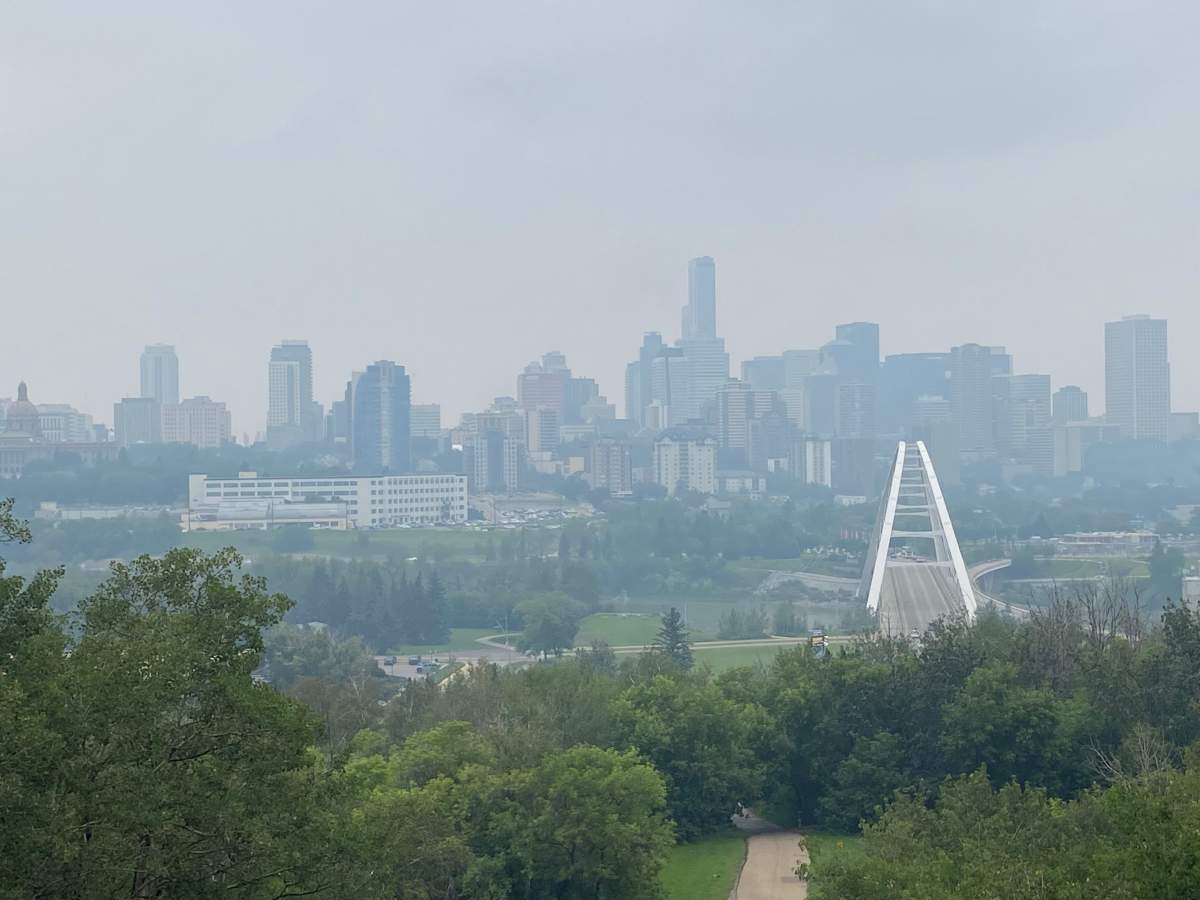
According to Alberta Lung, an AQHI of five or more can still lead to damage and inflammation as fine particles from fires, chemicals and pollution — so small they can’t be seen — are inhaled deep into lung tissue.
The health agency advises when the AQHI hits five or higher, people should consider limiting their time outdoors or wearing a N95 mask, and once inside, take steps to rid themselves of contaminants like changing clothes, washing their face, and running air filters via HEPA or HVAC systems.
Health experts have said the very fine particulate matter can be absorbed into the bloodstream and have impacts on a person’s brain as well.

Many people with asthma or other chronic conditions — as well as infants, young children, pregnant people and seniors — feel the effects of smoke and other air pollution at lower levels than people who are very healthy.
Kids are especially susceptible due to their biology — both now and over the long term. Kids have a smaller respiratory system and breathe faster than adults, so their concentration of pollution is higher than an adult’s and over time, it can affect their development or lead to having asthma.
In addition to asthma, research has shown that wildfire smoke is associated with more hospital visits for both children and adults with other lung conditions, such as viral infections, pneumonia and chronic obstructive pulmonary disease (COPD), as well as heart attacks and strokes.
Some of the first signs someone may be reacting to smoke particles include:
- Itchy eyes
- Sore throat
- Cough
- Nasal congestion
- Stuffy nose
- Headache

What’s in wildfire smoke?
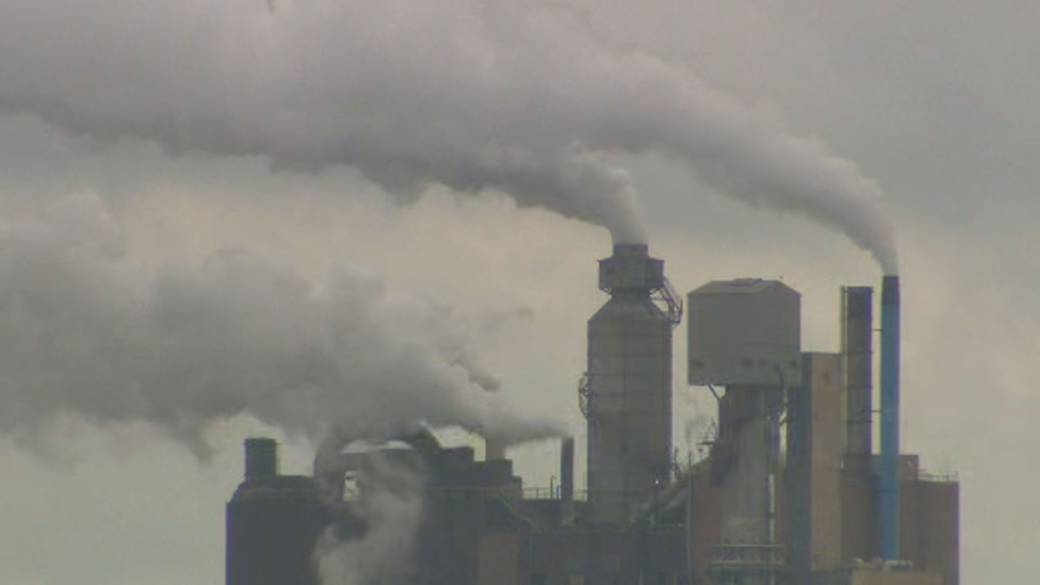
While wildfires are a natural part of the boreal forest ecosystem, a growing number of studies have documented how climate change, driven by the burning of fossil fuels, is making them larger and more intense — and contributing more to air pollution.
The fires churn out more fine particle pollution, known as PM2.5, and it’s a particularly harmful component of wildfire smoke. It’s tiny enough to get deep into the lungs and in the long run, can have serious health effects. PM 2.5 comes from a wide range of sources, including power plants and vehicles.
Canadians can track concentration of wildfire smoke by particulate size using Environment and Climate Change Canada’s Fire Works map.
A 2024 study estimated the number of smoke-related deaths from wildfires linked to climate change has soared since the 1960s.
The study estimates, using mathematical modeling, that about 12,566 annual wildfire smoke-related deaths in the 2010s were linked to climate change, up from about 669 in the 1960s, when far less carbon dioxide was concentrated in the atmosphere.
Translated to a proportion of wildfire smoke mortality overall, the study estimates about 13 per cent of estimated excess deaths in the 2010s were linked to climate change, compared to about 1.2 per cent in the 1960s.
Last year, Environment Canada changed up its colour-coded Air Quality Health Index to improve how air quality-related health risks are communicated and understood by the public. The change was prompted by a “record number” of AQHI 10+ scores during the 2023 wildfire season.
— with files from The Canadian Press and Emily Mertz




Comments
Want to discuss? Please read our Commenting Policy first.