


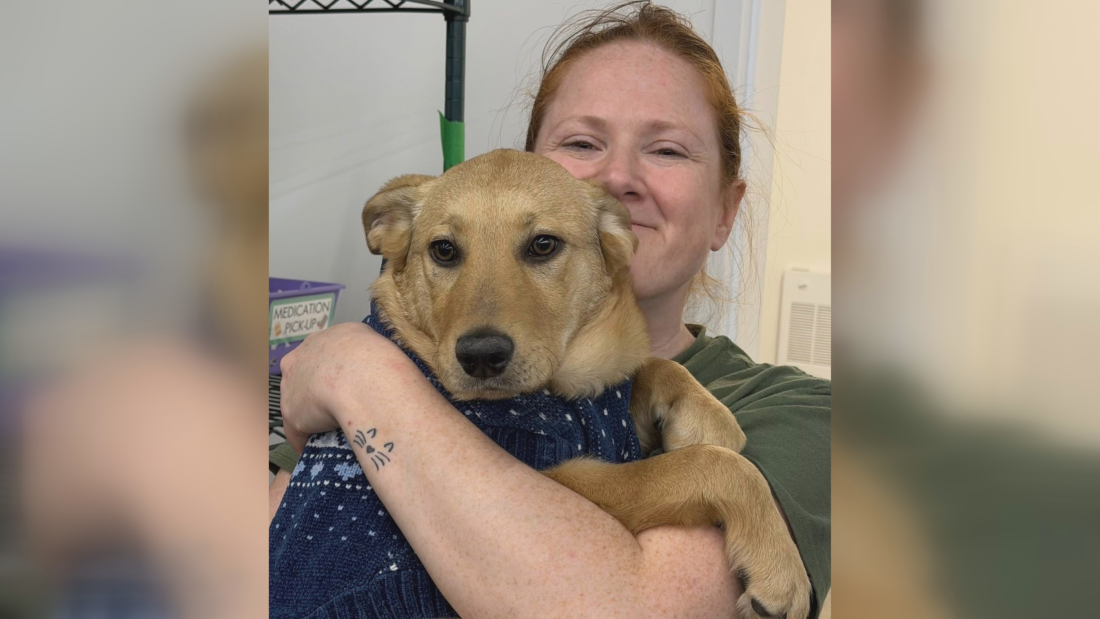
An animal rescuer from Winnipeg was found dead, with stray dogs around her, while volunteering in northern Manitoba.

Amanda Nobiss, 37, was initially reported as missing by a friend at approximately 12:45 a.m. last Friday, the Manitoba First Nations Police Service (MFNPS) said online later that day.
Her body was found around 6 a.m. by a local maintenance worker, it said.
She was in Sandy Bay Ojibway First Nation working alongside K9 Advocacy Manitoba, a non-profit dedicated to helping reservations manage the overpopulation of dogs.
“The circumstances surrounding the death are not believed to be suspicious at this time. Several aggressive dogs had been observed in the area,” according to the MFNPS release.
It’s believed she was killed by strays while volunteering to manage the overpopulation of dogs in the northern Manitoba community. An autopsy will be done, according to the police service.
Sandy Bay Ojibway First Nation said it is aware of the overpopulation of dogs in its community. It said the nation “has been actively working to address the longstanding issue of stray and aggressive dogs” in a news release Saturday.
“Based on the information currently available to the First Nation, it is our understanding that the canine advocate entered the community after regular business hours and attempted to retrieve dogs,” the nation’s release continued.
“Sandy Bay Ojibway First Nation remains committed to working with its partners to develop long-term, humane solutions that protect both people and animals.”

Get daily National news
Global News reached out to both Sandy Bay Chief Trevor Prince and the MFNPS for comment or an update. As of publishing, no response was received.
K9 Advocacy declined doing an interview, saying it would not speak with the media out of respect for the Nobiss family.

Debra Vandekerkhove, the managing director of a rescue group called the Manitoba Animal Alliance, said this is “a very tough loss” for the rescue community.
“It was very, very difficult and shocking for everyone, and trying to come to terms with the safety issue of people and the calling that all rescue groups have been doing for so long to help nations with health and safety of people and pets,” Vandekerkhove said.
“We need help. You cannot leave this to volunteers only to do this.”
Managing dog overpopulation in northern communities is an arduous task that requires funding – which it currently lacks, the animal advocate said.
“There’s no specific funding or any sort of national or provincial strategy across Canada to help animals in Indigenous nations,” she noted.
- Administration recommends Calgary double contribution to Werklund Centre modernization
- Calgary emergency crews say more water rescue calls coming in 2026 than 2025
- Family of woman who died in e-scooter accident pleads for riders to wear helmets
- Churro the Burro’s adventure on BC Ferries delights thousands


“We need funding (and) can’t do it alone. We’re volunteers.”

The alliance works to create a community-led animal management program that is specific to the places it works in.
“If people think we can spay and neuter our way out of the problem, we cannot. We have to focus on people. We have to focus on the safety of our volunteers,” Vanderkerkhove said.
“We need to focus on people in communities, human, and the humane aspect of animals and animal care is number one.”
Manitoba’s Chief Veterinary Office (CVO) declined an interview with Global News and instead issued a statement, which read in part:
“The province supports community-led efforts to provide access to veterinary services and public education.”
Animal control is up to municipalities to manage, the CVO added.

-
![]() Community gathers for dog management discussions
Community gathers for dog management discussions -
![]() Peguis First Nation woman attacked by dogs, RCMP say
Peguis First Nation woman attacked by dogs, RCMP say -
![]() Manitoba’s police watchdog investigating after officer kills dog on First Nation
Manitoba’s police watchdog investigating after officer kills dog on First Nation -
![]() ‘I can’t even walk next-door without dogs trying to attack’: First Nations near Calgary warn residents of dog attacks
‘I can’t even walk next-door without dogs trying to attack’: First Nations near Calgary warn residents of dog attacks -
![]() Child killed in dog attack on northern Alberta First Nation
Child killed in dog attack on northern Alberta First Nation -
![]() Girl attacked by pack of dogs on Manitoba First Nation
Girl attacked by pack of dogs on Manitoba First Nation -
![]() Alberta community held hostage in their homes after wild dogs attack
Alberta community held hostage in their homes after wild dogs attack




Guardians of the Earth. What a joke. Murdering dogs because you have no clue of how to take care of them.
These people are not responsible enough for pets. They should be banned on reserves. These idiots buy a puppy, swoon over it for a month or two, them shove it out the door to fend for itself.
Ironic that this is the same way they raise their children.
It seems as if the obvious solution is a cull of wild and stray canine population. If they’re killing humans, it needs to be done.
Ban all animals on reserves until they are taught to look after them. Also stop money going to them. It is the owners fault not the dogs starving to death and constantly abused.
Sandy Bay is northern Manitoba???? It’s only 70 km NW of Portage la Prairie. Someone needs to familiarize themselves with basic cartography.
Reservations get millions of government funding every year. They should have plenty of cash flow to clean up their problems
Funding? You get more than enough money from the government! What you need are guns (which you have) and the willingness to cull all the stray dogs. Those which are owned get neutered/spayed. This is a problem of your own doing. If the “spirits” tell you it is wrong to kill the dogs, then learn to live with them….